 Proudly Serving Allentown, Bethlehem, Easton & the Lehigh Valley
 ISA Certified Arborists
 Fully Insured

 (484) 225-8400

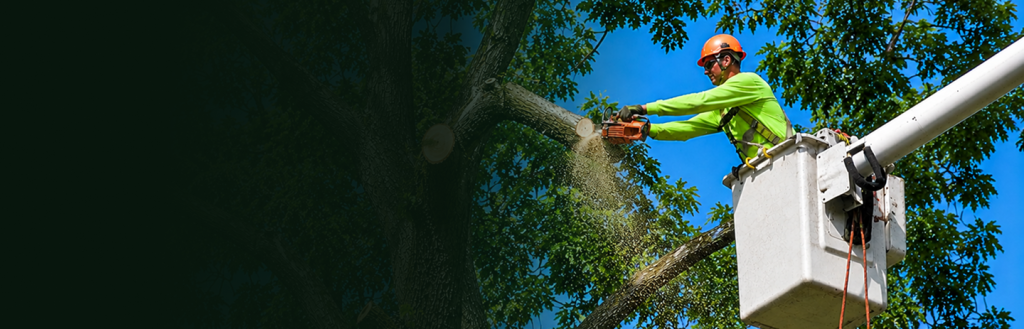
Tree Removal in
Bethlehem, PA
Tree removal in Bethlehem, PA. Thrive Tree handles
hillside South Side lots, North Side canopy,
and EAB-damaged trees across the city.
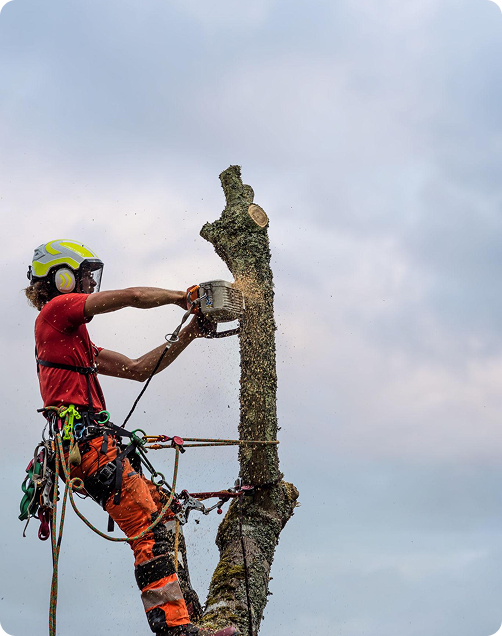
Bethlehem Doesn’t Have Flat Lots. Tree Removal Here Reflects That.
The South Side’s residential grid between Fourth and Eighth Avenues runs on terrain that rises steadily toward the ridge above Linden Street. A silver maple that has been growing on one of those hillside lots for fifty years isn’t just a large tree on a small property. It’s a large tree on a slope, with a crown weighted by gravity in one direction and a root system that has spread asymmetrically to compensate. Tree removal on that site requires a different plan than the same tree on a flat East Allentown lot. The lean, the anchor points, the rigging geometry, and the equipment positioning all change when the ground isn’t level.
The North Side has its own version of the problem. The streets near Monocacy Creek carry mature oaks, ashes still standing after the EAB wave, and a mix of ornamentals planted in the late industrial era when the neighborhoods around the Bethlehem Steel corridor were at their most densely occupied. Those trees are now growing in yards that have changed hands multiple times, often without anyone documenting what’s underneath them or how close the root systems have gotten to aging foundations and sewer laterals.

Professional Tree Removal in
Bethlehem, PA
Every tree removal job in Bethlehem starts with the slope question. On the South Side blocks climbing toward Linden Street, the answer determines everything else: which direction the tree can fall, where rigging anchors can be established, how equipment gets positioned on a grade without creating a secondary hazard, and whether the crew is working with or against the natural lean. A tree that wants to go downhill toward a structure requires a different response than one that leans away from it. Getting that read wrong before the first cut is how jobs go badly wrong on hillside properties.
The South Side’s narrow attached lots add a second constraint on top of the terrain. Houses share walls or sit within arm’s reach of each other on blocks like Wyandotte and Hayes Streets, which means a sectional takedown isn’t the preferred approach. It’s the only viable one. Crown sections come down rigged and lowered to whatever staging area exists, often a shared driveway or a sloped side yard that itself requires care to work on. Once the crown is clear, the trunk comes down in lengths that can be managed on that grade. The stump question comes next, and on a hillside Bethlehem lot, extraction scope changes because root systems spread further downhill than uphill.
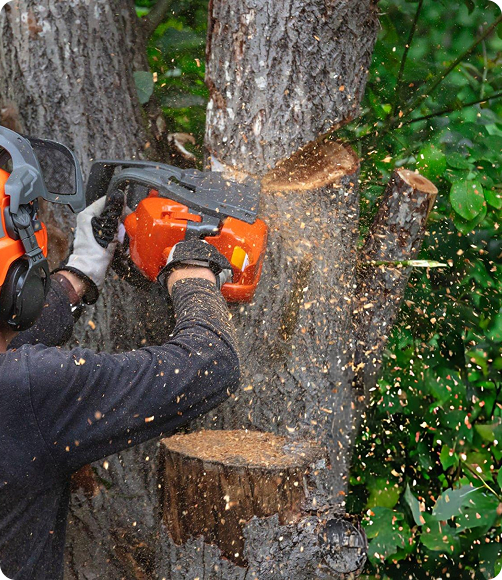
Licensed and Insured Crews
Bethlehem’s PPL infrastructure runs overhead on the South Side in configurations that reflect the age of the neighborhood. Service drops on blocks like Morton and Brodhead Streets often run close to the very trees that are being removed, which means the rigging geometry for the job has to account for the wire before any section moves. Crews carry full general liability and workers’ compensation coverage. On a dense hillside lot where a rigging failure has both gravity and proximity working against it, confirming insurance before any work starts isn’t optional.
Hillside work requires crew experience that flat-lot removal doesn’t develop. Positioning a chipper on a grade, establishing a stable work platform for a climber on a sloped root zone, reading how a leaning tree on uneven ground will actually behave under a notch cut: these are judgment calls that come from working those conditions regularly. A crew that primarily works flat suburban lots will run into trouble on the South Side’s hillside properties.
Bethlehem Tree Removal Specialists
South Side homeowners on the hillside lots above Fourth Avenue dealing with silver maples and Norway maples whose root systems have been spreading downhill under concrete stoops and retaining walls for decades. North Side residents near Monocacy Creek managing mature oaks and EAB-killed ashes that have never had a structural assessment, on lots where the housing density means a failure has nowhere to go but a neighboring structure. The consistent variable across Bethlehem isn’t the species. It’s the terrain
Scheduling runs tight in spring and the two-week post-storm window books completely. Calling in late summer for fall work or in early winter for a dormant-season removal typically gets a better turnaround and sometimes better site conditions: frozen ground holds equipment better on a grade than soft late-spring soil does.
Complete Tree Removal Services for
Bethlehem Properties
Thrive Tree handles tree removal across Bethlehem’s full range of site conditions, from the flat
commercial parcels along the Route 378 corridor to the steep hillside residential lots
above the South Side that require a fundamentally different approach to every stage of the work.
Hillside Tree Removal
The defining service condition for a significant portion of Bethlehem’s residential tree removal work. Properties on the hillside streets above the South Side require slope assessment before any removal plan is established. Fall direction control, rigging anchor selection, and equipment positioning all change on a grade. A tree removal plan written for a flat lot applied to a hillside property is a liability, not a plan.
Hazard Tree Removal
Bethlehem’s older North Side and South Side neighborhoods carry tree stock that has been in the ground since the Steel era, much of it unpruned and some of it with decay that isn’t visible from street level. Assessment covers trunk integrity, basal decay, root zone condition, and co-dominant stem unions. On the North Side near Monocacy Creek where root systems have had decades to spread under sidewalks and foundations, the root assessment often matters as much as what’s visible above grade.
Large Tree Removal
Standard on Bethlehem’s constrained residential lots and required on hillside properties where a ground fell isn’t controllable. Crown sections come down top-first, rigged and lowered to a staging area. On the South Side’s attached row housing, the staging area is whatever flat ground exists on a sloped lot, which sometimes means the street is the only option and the job requires temporary traffic management.
Emergency Storm Response
Nor’easters and summer derechos hit the Lehigh Valley hard and leave split crowns and uprooted root plates across Bethlehem’s hillside neighborhoods. A tree that has lost its root plate on a slope becomes a secondary hazard immediately. Emergency response handles trees on structures, blocking egress, or in contact with utility lines. Hillside properties get prioritized when a failed root plate puts a tree in motion.
Historic District Tree Removal
Tree removal on or near properties within Bethlehem’s North Side historic district, particularly around the Moravian settlement area and Church Street, may require review coordination with the city’s historic preservation office before work proceeds. This applies primarily to street trees and trees visible from public rights-of-way. Confirming whether a property falls within the historic district boundary before scheduling avoids permit complications that can delay a job by weeks.
Frequently Asked Questions
Hillside properties on Bethlehem’s South Side cost more to work than flat-lot removals of the same tree size, and the price difference is real. Slope assessment, modified rigging geometry, equipment positioning on a grade, and the slower pace of sectional work on uneven ground all add time that flat-lot pricing doesn’t capture. Beyond terrain, size, species, structural condition, and proximity to structures drive the number. An in-person estimate at the Bethlehem property is the only figure worth using for planning.
The crew assesses the slope and access conditions on arrival before positioning equipment. On hillside South Side lots, that positioning step takes longer than it does on a flat property. Vehicles near the tree should be moved beforehand. Most residential removals in Bethlehem run two to six hours, with hillside jobs on the longer end regardless of tree size. Debris is processed throughout the job rather than staged for a return visit.
Private property trees within the historic district boundary generally follow standard permitting, but street trees and trees visible from public rights-of-way in the North Side historic district around Church Street and the Moravian settlement area may require review by the city’s historic preservation office before removal proceeds. Confirming the property’s historic district status and whether the tree in question falls under preservation review is worth doing before scheduling, not after a crew arrives.
Significantly. The slope changes fall direction control, rigging anchor options, equipment positioning, and how the crew establishes a stable working platform for the climber. A tree on a Bethlehem hillside lot that leans toward a structure downhill is a more complex job than the same tree on a flat lot with the same lean, because gravity is working against the rigging rather than with it. Crews experienced on hillside properties read the slope before establishing the work plan. Those who aren’t tend to learn the hard way.
Standard removals book one to three weeks out in normal conditions. Spring and post-storm windows fill significantly faster. Late summer and fall scheduling often gets a better window and has practical advantages on Bethlehem’s hillside properties: the ground is firmer in late summer than in wet spring conditions, and frozen winter ground holds equipment more predictably on a grade than soft soil does. Emergency response for active hazards moves as quickly as site conditions and crew availability allow.
Pennsylvania does not issue a statewide tree contractor license. All Thrive Tree crews carry general liability insurance and workers’ compensation. Proof of insurance is available before work begins. On a dense Bethlehem hillside lot where a rigging failure has gravity helping it reach a neighboring structure, that coverage is not a formality. It is the difference between a manageable incident and a significant liability exposure for the property owner.
GET STARTED TODAY
YOUR TREES DESERVE
EXPERT ATTENTION
Don’t wait until a hazard becomes a headline. Call Thrive
Homes today for a free, no-obligation estimate
from your local certified arborists.
 (484) 225-8400

FULLY LICENSED
& INSURED

CERTIFIED
ARBORISTS

SAFE, RELIABLE
& PROFESSIONAL
