 Proudly Serving Allentown, Bethlehem, Easton & the Lehigh Valley
 ISA Certified Arborists
 Fully Insured

 (484) 225-8400


Tree Trimming in
Nazareth, PA
Tree trimming in Nazareth, PA. Thrive Tree handles
structural pruning on historic district properties
and limestone-substrate borough lots.
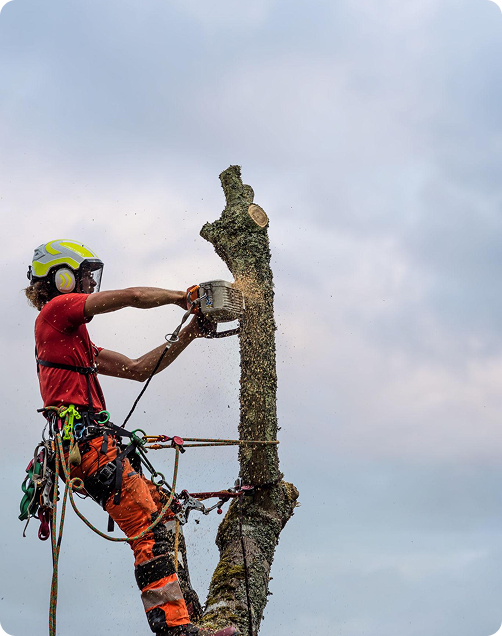
Nazareth’s Trees Grow Differently Here. Trimming Has to Account for That.
Tree trimming in Nazareth requires a read of the ground before a read of the crown. The shallow limestone soils that underlie the borough produce root systems that spread wide and flat rather than deep, and that growth pattern affects crown weight distribution in ways that aren’t obvious from street level. A silver maple on a Center Street property that has been growing for sixty years over Nazareth’s limestone bedrock has a lateral root spread significantly wider than the same tree would develop in valley floor soils. The crown above it has been compensating for that anchoring pattern throughout its life. Tree trimming that doesn’t account for how the tree is actually balanced, not just how it looks from the sidewalk, misses the structural picture.
Nazareth’s position at nearly 500 feet above the valley floor adds the ice loading variable. The borough sits above Allentown, Bethlehem, and Easton, and ice events hit it harder and earlier in the season. Silver maples and Norway maples on Nazareth’s compact borough lots accumulate ice in their dense canopies in ways that deadwood removal and crown thinning directly address. A tree on South Main Street that hasn’t been trimmed in a decade is carrying structural risk that compounds with every November ice event.

Professional Tree Trimming in
Nazareth, PA
The right question on any Nazareth trimming job is what the tree actually needs given how it has grown in these specific conditions. A Norway maple on a borough lot off Mauch Chunk Road that has been growing in shallow limestone soil for forty years has developed differently than the same species on a Bethlehem South Side lot in clay-heavy valley floor soil. The root anchoring is different, the crown compensation is different, and the structural failure points are in different places. Tree trimming in Nazareth that applies the same approach as valley floor work misses what the limestone substrate has done to the tree’s architecture over decades.
The historic district context adds a dimension that purely structural trimming doesn’t cover. Trees on properties along East Center Street and the blocks around the Whitefield House are part of a National Register streetscape that the borough monitors. Significant pruning work that changes the visible character of a tree in the historic district, particularly on a tree that has been growing alongside a Moravian-era stone facade for generations, is worth a preliminary conversation before work is scheduled. The goal is to find the approach that addresses the structural problem without unnecessarily altering the character the tree contributes to.
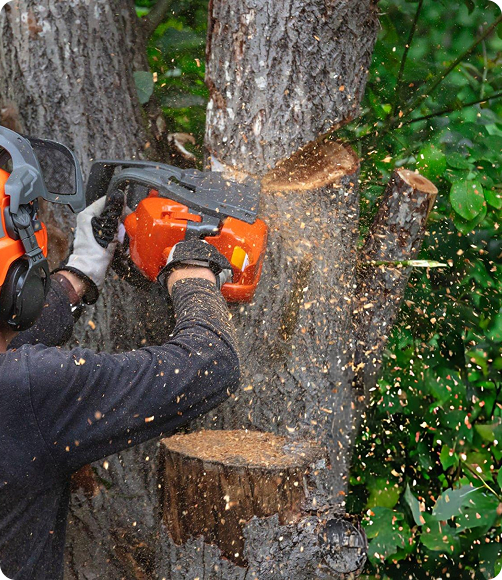
Certified Local Arborists
Nazareth’s limestone geology is not common training ground for arborists working primarily in Lehigh Valley market. The shallow soil profile over limestone produces root behavior, crown compensation patterns, and wound response characteristics that differ from what certified arborists encounter on standard valley floor sites. An arborist who has worked limestone-substrate properties in Northampton County’s northern tier, where the geology is consistent from Nazareth through Bath and Bangor, brings site-specific knowledge to Nazareth trimming work that general Lehigh Valley experience doesn’t automatically provide.
Equipment on Nazareth borough jobs means a climbing setup on most interior lots. The compact grid between Nazareth Borough Park and the historic district core doesn’t accommodate aerial equipment on interior properties. A climber working through the crown of a silver maple on South Broad Street gets a structural read that a bucket truck positioned on the street can’t replicate, particularly on a tree whose root anchoring and crown balance reflect decades of adaptation to limestone substrate conditions.
Nazareth Tree Trimming Experts
Homeowners on Nazareth’s historic district lots who are managing a problem that has three variables at once: a tree that has been compensating for shallow limestone anchoring for fifty years, a crown carrying structural deficits that compound with every ice season at 500 feet, and a National Register streetscape the borough monitors closely enough that significant visible pruning warrants a conversation before work is scheduled. That combination doesn’t exist anywhere else in the Lehigh Valley. Homeowners on the township conversion lots in Upper and Lower Nazareth are a different situation entirely. Newly planted suburban stock alongside old woodlot-edge trees that haven’t had an arborist inside them since the agricultural use ended, and the formative window on the younger trees is closing.
Scheduling in Nazareth runs on the same regional rhythm as the rest of Northampton County, with one local variation worth noting: the borough’s elevation means pre-ice-season trimming has real practical value. Getting deadwood out of the canopy before the first hard ice event of November or December costs less and causes less disruption than responding to failure after one. Calling in September or October for pre-season structural work consistently produces better outcomes than calling in January after the damage is already done.
Complete Tree Trimming Services for
Nazareth Properties
Thrive Tree handles the full range of tree trimming work across Nazareth, from structural intervention
on the aging canopy of Nazareth’s historic district lots to routine maintenance on the suburban
lots of Upper and Lower Nazareth Townships taking shape around the borough’s edges.
Crown Reduction
Takes height and spread out of trees that have outgrown their sites without destroying their structure. On Nazareth’s compact borough lots, silver maples and Norway maples that have been growing in shallow limestone soils for decades often develop wider lateral crowns than the same species in valley floor conditions, pressing into neighboring properties and utility infrastructure in ways that the ground-level root spread pattern predicts but the visual canopy alone doesn’t. Reduction cuts go to lateral branches capable of carrying the remaining crown.
Historic District Clearance Pruning
Clearance work on Nazareth’s historic district properties requires balancing structural necessity against the visual character the tree contributes to the streetscape. On East Center Street and Church Street blocks, a tree growing against an 18th-century stone facade is both a structural concern and part of a National Register setting. The work removes the branches causing or about to cause structural contact while preserving the character the tree contributes to the historic district’s visual integrity.
Dead Wood Removal
The highest-priority trimming work on any Nazareth property, given the borough’s elevation and ice exposure. Dead scaffold branches in the crown of a silver maple on Center Street or a Norway maple on South Broad Street are a predictable failure event during Nazareth’s ice season. Systematic deadwood removal before November eliminates those specific failure points. The dense canopy that silver maple and Norway maple develop in Nazareth’s conditions also accumulates ice load that crown thinning reduces before the storm makes that decision for the tree.
Structural Pruning
Before any trimming plan is established on a Nazareth borough property, the relationship between the visible crown and the root anchoring beneath it needs to be understood. Trees in shallow limestone soils develop crown compensation patterns over decades that standard valley floor assessments don’t capture. A structural assessment on a Nazareth property includes a surface root read and a crown balance evaluation that accounts for how the limestone substrate has shaped the tree’s architecture.
Formative Pruning
The suburban lots developing in Upper and Lower Nazareth Townships around the borough’s edges are establishing tree stock that will define those properties for decades. A young red oak or honeylocust on a Hanoverville Road property with a competing leader or a poorly attached scaffold branch is a straightforward pruning job now and a potential removal conversation in twenty years. Getting into newly planted township trees early establishes the branch architecture before the weight and the liability compound together.
Frequently Asked Questions
Nazareth’s limestone substrate adds a structural assessment step to trimming work that standard valley floor jobs don’t require, which affects the time and scope of the estimate. Historic district properties on Center and Main Streets require a context read alongside the structural assessment. Township lots in Upper and Lower Nazareth with mixed woodlot-edge and planted stock involve larger canopies and more variable conditions than compact borough lots. An in-person estimate at the Nazareth property is the only accurate number.
Most established trees benefit from assessment every three to five years. The Norway maples and silver maples on Nazareth’s compact borough lots, growing in shallow limestone soils that produce wide lateral crowns, close in faster than the same species on valley floor properties and often warrant attention on the shorter end of that range. Pre-ice-season trimming in September or October to address deadwood before Nazareth’s high-elevation ice events hit is worth scheduling annually on mature trees with structural concerns.
Late winter is the standard structural window: dormant canopy, visible branch architecture, efficient wound healing before spring growth. For Nazareth specifically, the pre-ice-season window in September and October has practical value that doesn’t apply to lower-elevation communities. The borough’s position at nearly 500 feet means ice events arrive earlier and with more accumulation than in Allentown or Bethlehem, and deadwood removal before that window costs less and causes less disruption than addressing failures after the fact.
Trimming on private property trees in Nazareth generally doesn’t require a borough permit. Significant pruning work on trees visible from public rights-of-way in the National Register Historic District, particularly trees adjacent to designated historic structures on Center and Main Streets, may warrant coordination with the borough before proceeding. The historic district covers 188 acres and the borough takes its character seriously. A preliminary conversation before scheduling significant pruning on a historic district property costs nothing and avoids complications.
Limestone substrate in Nazareth produces trees with shallower root anchoring and wider lateral root spread than the same species on valley floor soils. Over decades, that root pattern produces crown compensation, meaning the tree’s branch architecture adjusts to how it’s anchored from below. A trimming assessment that reads only the crown without accounting for the root anchoring misses the structural picture. On Nazareth properties, the surface root pattern is part of the pre-trimming assessment, not an afterthought.
Yes, with the right approach. Norway maple’s epicormic regrowth response to heavy cuts is a consequence of improper pruning, not an inherent trait. On Nazareth’s compact borough lots where Norway maple is the dominant street and yard species, correct work reduces the dense interior canopy and the scaffold branches most likely to fail under ice load, without triggering the stub-cutting regrowth cycle. The limestone substrate means these trees anchor differently than their valley floor counterparts, which changes where the reduction cuts are made but not the fundamental approach.

GET STARTED TODAY
YOUR TREES DESERVE
EXPERT ATTENTION
Don’t wait until a hazard becomes a headline. Call Thrive
Homes today for a free, no-obligation estimate
from your local certified arborists.
 (484) 225-8400

FULLY LICENSED
& INSURED

CERTIFIED
ARBORISTS

SAFE, RELIABLE
& PROFESSIONAL
