 Proudly Serving Allentown, Bethlehem, Easton & the Lehigh Valley
 ISA Certified Arborists
 Fully Insured

 (484) 225-8400

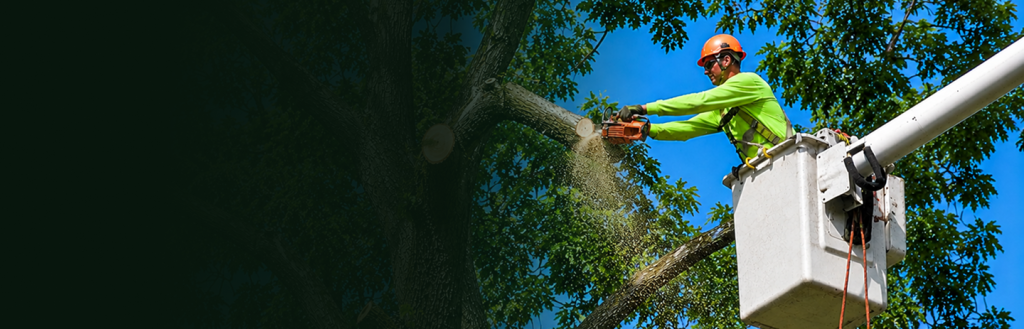
Tree Removal in
Allentown, PA
Tree removal in Allentown, PA. Thrive Tree handles
constrained city lots, aging canopy, and PPL wire
zones across the West End and East Side.
Most of Allentown’s Problem Trees Were Never Supposed to Get This Big
Bradford pears were a popular street and yard tree in Allentown through the 1980s and 1990s. Nurseries sold them as fast-growing, symmetrical, low-maintenance. The pitch was accurate for about fifteen years. After that, the included bark unions at the main scaffold branches begin to fail, and a 40-foot Bradford pear in a North Allentown backyard on Union Boulevard becomes a tree removal job with a loud failure mode if the work waits too long. The same story runs with the ash population along the Jordan Creek corridor, most of it now dead or dying from Emerald Ash Borer, and the silver maples that dominate Fairgrounds and the streets north of Tilghman that were planted in the postwar era and have been quietly spreading root systems under hardscape for sixty years.
Allentown lots don’t give a removal crew much room. The East Side’s older residential blocks run narrow, with houses close together and side yards that double as the only equipment path. The West End’s tree canopy is dense enough that removal work on interior lots often requires rigging off neighboring trunks. Neither situation tolerates a miscalculation.

Professional Tree Removal in
Allentown, PA
A Bradford pear that’s splitting at the main union doesn’t announce a schedule. Neither does a dead ash with a hollow trunk along Jordan Creek. The removal process starts before the saw: reading the root zone for heave or decay, assessing how the included bark in a union changes the effective hinge, identifying which direction the crown is actually weighted versus which direction the tree appears to lean. On a lot off North Seventh Street where the only staging area is a twelve-foot-wide driveway shared with the neighbor, those details determine whether the job goes cleanly or whether someone has a problem.
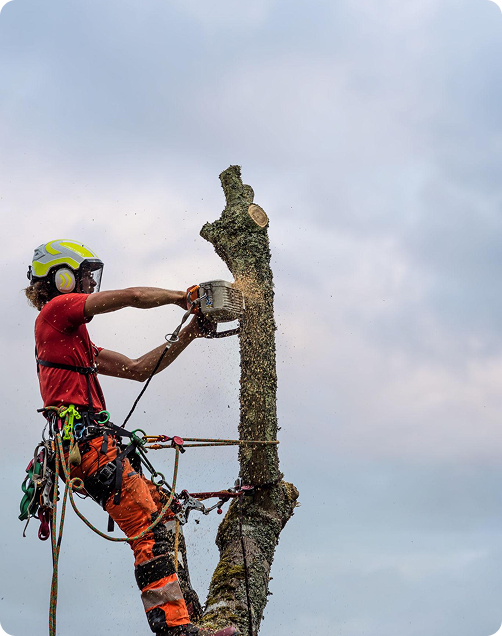
Most Allentown residential removals are sectional by default. The crown comes out in pieces, each section rigged and lowered rather than dropped, working downward until the trunk can be sectioned at ground level. The exception is when a property off one of the wider commercial corridors, Lehigh Street, MacArthur Road, or the Route 22 service road frontage, has enough open access for crane-assisted work, which reduces climber hours and overall job time significantly. Stump grinding should be part of the same scheduling conversation. A fresh stump on a tight Allentown lot starts creating surface root problems within a season.
Licensed and Insured Crews
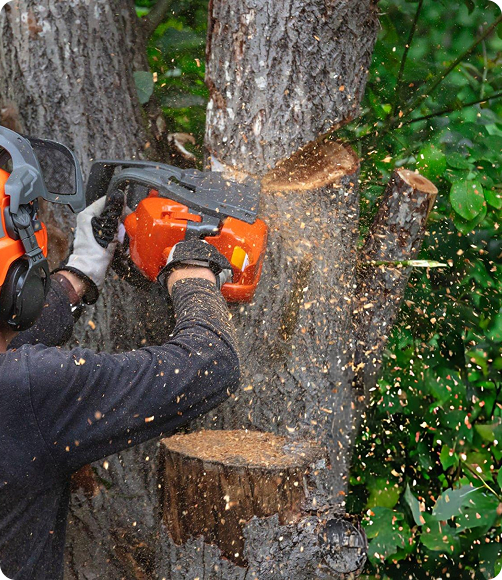
Allentown’s utility infrastructure is overhead almost everywhere in the older residential grid. The PPL distribution lines that run along or behind most blocks in the West End and Midtown aren’t just a clearance issue. They define the rigging geometry of any removal in their vicinity. A section that would drop freely on an open suburban lot needs to be controlled to a landing zone that keeps the rigging line well clear of the wire. Crews carry full general liability coverage and workers’ compensation. A certificate is available before work starts. On a dense city lot where a rigging failure lands on a parked car or a neighbor’s fence, the difference between insured and uninsured isn’t a paperwork question.
Bradford pears along North Allentown’s residential blocks present a specific rigging challenge: the co-dominant stem structure that makes them prone to failure also makes establishing a reliable rigging anchor difficult once the tree is compromised. Crews assess the anchor situation before committing to a rigging plan. Sometimes the anchor point isn’t the tree itself.
Allentown Tree Removal Specialists
West End homeowners whose ash trees have been standing dead since the EAB wave came through, now into their second or third winter of hollow-trunk risk on tight lots where failure has nowhere to go but the neighboring property. Long-established Fairgrounds and Midtown residents dealing with silver maples that have been spreading roots under hardscape since the postwar era. The consistent factor across Allentown is the access constraint. There is almost always a fence, a utility drop, or a neighboring structure that defines what the crew can and cannot do.
Estimates require an in-person look. The angle of a lean, the condition of the root flare, and whether the only staging area is a six-foot-wide side yard are not things visible in a photo. Jobs are scheduled with a real date and held to it unless weather makes climbing unsafe. Spring books fast. Calling in late winter for spring work gets a better window than calling in April.
Complete Tree Removal Services for
Allentown Properties
Thrive Tree handles the full range of removal work across Allentown, from single dead
ashes on East Side residential lots to multi-stem clearings on the vacant parcels being
redeveloped along the Hamilton Street corridor.
Large Tree Removal
The standard method on Allentown’s constrained residential lots. Crown sections come down top-first, rigged and lowered to a staging area rather than dropped. On interior lots in the West End and Midtown where the swing radius between a neighbor’s structure and the utility drop is measured in feet, this isn’t optional. It’s just how the work gets done.
Hazard Tree Assessment
Dead ash trees along the Jordan Creek corridor and the older residential blocks north of Tilghman frequently look stable from the street until a probe reveals a hollow trunk. Assessment covers root zone integrity, basal decay, trunk cavities, and the co-dominant stem unions that make Bradford pears and silver maples prone to sudden failure. A written assessment is available on request and sometimes changes the recommendation from removal to monitoring.
Crane-Assisted Removal
Practical on properties with adequate street or alley access: corner lots, properties along wider corridors like Lehigh Street and MacArthur Road, and commercial parcels off Route 22 where equipment can be positioned without blocking a shared driveway. Crane work cuts climber hours and overall job time on larger trees and is worth the conversation when access allows it.
Emergency Storm Response
Allentown takes a direct hit from Lehigh Valley derechos and nor’easters. The summer storm events that move up the I-78 corridor drop Bradford pears, split silver maple crowns, and push over ash trees that were already compromised. Emergency response handles trees on structures, blocking egress, or making utility contact. Active hazards get prioritized. Cosmetic storm damage schedules like standard removal work.
Site Cleanup and Debris Removal
Wood and brush is chipped on-site or hauled depending on volume and site access. On Allentown’s narrower residential lots where the front yard is the only staging area and the neighbors are close, cleanup is part of the job, not an afterthought. Trunk sections can be cut to firewood length on request. The work zone is clear before the crew leaves.
FREQUENTLY ASKED QUESTIONS
No standard rate covers Allentown’s range. A dead ash on an open East Side lot is a straightforward job. A 50-foot Bradford pear splitting at the main union in a tight West End backyard with a PP&L drop on one side and a shared fence on the other is a half-day rigging exercise. Size, species, structural condition, and site access all drive the number, and access constraints on Allentown’s older residential blocks routinely add more to a job estimate than tree size alone. An in-person estimate is the only accurate figure.
The crew positions equipment at the best available access point, usually the street or the driveway, and establishes the work zone before cutting starts. Any vehicles near the tree should be moved beforehand. Most residential removals in Allentown run two to six hours depending on tree size and site complexity. Interior lots in the West End and Midtown take longer than the job size alone suggests because rigging to a controlled staging area is slower than a ground fell. Debris is processed throughout the job.
Standard jobs book one to three weeks out in normal conditions. Spring and the post-storm window after any significant weather event push that significantly. Fall and winter typically have better availability, and winter work on certain Allentown properties has practical advantages: frozen ground takes less damage from equipment, and the bare canopy makes structural assessment easier than it is through a full summer crown. Emergency response for active hazards moves as fast as site conditions allow.
Not automatically, but a Bradford pear that has reached 30 feet or more and hasn’t been assessed is carrying risk that compounds with age. The included bark unions at the main scaffold branches get weaker as the crown gets heavier, and failure usually happens during a storm rather than on a calm day when the timing is convenient. An assessment determines whether the tree needs removal, structural pruning to reduce load on the failing unions, or monitoring. A Bradford pear that has already split at a main union is past the assessment stage.
Work near PPL distribution lines requires a different approach than open-lot removal. Crews handle the growth outside the wire zone and coordinate with the utility when line clearance is needed before the main stem can come down. That side of the work belongs to the utility. On Allentown’s older residential grid where overhead lines run along or behind nearly every block, that coordination step is routine, not exceptional. Build the utility notification window into the scheduling timeline from the start.
Pennsylvania does not issue a statewide tree contractor license. All Thrive Tree crews carry general liability insurance and workers’ compensation coverage. Proof of insurance is available before any work begins. On a dense Allentown residential lot where a rigging failure or an injured worker has nowhere to go but a neighboring property, that coverage is the difference between a manageable situation and a significant liability exposure for the property owner. It’s a reasonable question to ask before any crew starts work.
GET STARTED TODAY
YOUR TREES DESERVE
EXPERT ATTENTION
Don’t wait until a hazard becomes a headline. Call Thrive
Homes today for a free, no-obligation estimate
from your local certified arborists.
 (484) 225-8400

FULLY LICENSED
& INSURED

CERTIFIED
ARBORISTS

SAFE, RELIABLE
& PROFESSIONAL
