 Proudly Serving Allentown, Bethlehem, Easton & the Lehigh Valley
 ISA Certified Arborists
 Fully Insured

 (484) 225-8400


Tree Trimming in
Alburtis, PA
Tree trimming in Alburtis, PA. Thrive Tree serves compact
borough lots, Lock Ridge Park edge properties, and
Lower Macungie Township sites.
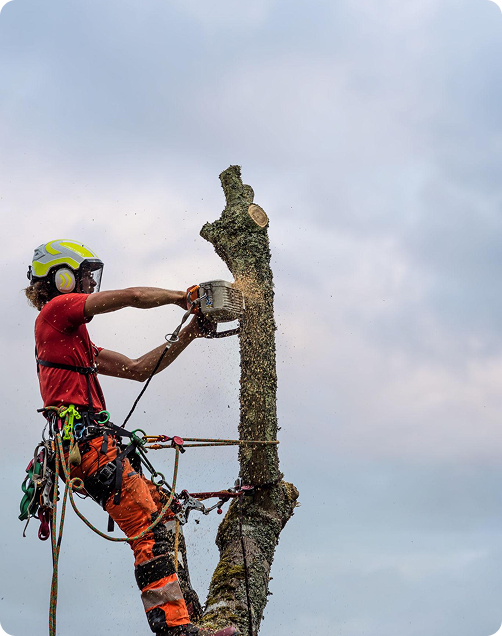
In a Borough This Small, a Neglected Crown Is the Neighbor’s Problem Too
At 0.7 square miles, Alburtis doesn’t have room for a tree to fail quietly. The lots on the older residential streets are close enough that a Norway maple or silver maple that hasn’t been assessed in fifteen years is almost certainly pressing into the neighboring property on at least one side. When it drops a scaffold branch, it lands on something. Tree trimming in Alburtis is structural management on tight lots. The same work that happens everywhere, but with less margin for deferral and less room to absorb a failure when deferral runs out.
The properties near Lock Ridge Park are a different situation. Trees growing at the edge of a 50-acre woodland park develop larger crowns and more complex branch architecture than the same species on a tight interior lot. Trimming those trees requires reading the crown in the context it actually grew in, not applying the same reduction and clearance approach that works two blocks toward Main Street.

Professional Tree Trimming in
Alburtis, PA
The first question on any Alburtis trimming job is what the tree actually needs, not what it looks like it needs from the sidewalk. A Norway maple with eight feet of clearance to the house on either side needs crown reduction targeting the scaffold branches that are pressing into those neighboring structures. A silver maple with a co-dominant stem that has been developing included bark for two decades needs a structural assessment before a single cut is made. Whether that conversation ends in reduction, cabling, or removal depends on what the assessment finds. Getting that distinction right requires being inside the crown, not reading it from below.
The railroad-era housing stock in the older parts of Alburtis was built when the East Penn Railroad made the borough viable, and the trees planted alongside it are now at or past their structural prime. Tree trimming that addresses what’s actually failing in those crowns is worth doing. Trimming that cleans up appearances without finding the co-dominant stems and the deadwood underneath is spending money on a deferral.
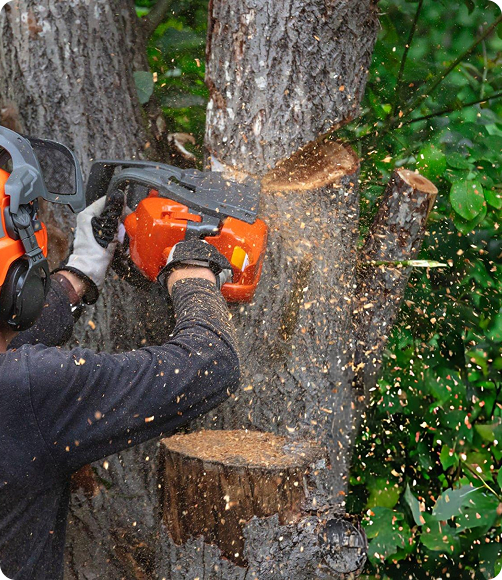
Certified Local Arborists
Norway maple and silver maple dominate the older residential streets in Alburtis, and the two species respond differently to pruning. Norway maple produces dense epicormic regrowth at heavy cut points. Weakly attached and structurally worse than what was there before. Silver maple compartmentalizes wounds poorly and is prone to internal decay at cut points. On lots where the neighboring property is always within reach of a failing branch, getting those species-specific responses right isn’t optional.
Most Alburtis interior lots don’t accommodate bucket trucks. The streets in the older residential grid are narrow, the lots are tight, and aerial equipment can’t position usefully on most interior properties. A climber working inside the crown makes targeted cuts to the branches that are actually causing structural problems. A lift cuts to what’s reachable from the street, which on a tight Alburtis lot is often not the same thing.
Alburtis Tree Trimming Specialists
The typical Alburtis interior lot trimming call comes from a homeowner who has been managing the visible problem themselves for years. A pole saw on the branches touching the house, occasional clearance work when something presses too close. What they haven’t addressed is the structural problem inside the crown, because that requires a climber, not a pole saw from below. Co-dominant stems with included bark on a Norway maple don’t announce themselves from the yard. The Thomas Street homeowner near Lock Ridge Park is dealing with a different situation: a large-canopy hardwood that has been growing at the park edge for decades and needs assessment proportional to that scale, not the quick clearance pass that works on interior lots.
Spring books fast across all of Lehigh County, and in a borough this small a single storm event puts every property in the same position at once. Structural hazard pruning before storm season produces consistently better outcomes than responding to damage after.
Complete Tree Trimming Services for
Alburtis Properties
Thrive Tree handles tree trimming across Alburtis’s range of conditions, from the tight lots of the
older residential grid to park-edge properties near Lock Ridge Park and the converting
agricultural lots of the surrounding township.
Crown Reduction
Takes height and spread out of trees that have outgrown their sites. On Alburtis’s tight residential lots, Norway maples and silver maples that have been growing without reduction are pressing into neighboring properties simultaneously. Reduction cuts go to lateral branches capable of sustaining the remaining crown, not to stubs that trigger decay and regrowth. On lots where the neighbor’s house is eight feet away, getting this right matters more than it does with room to spare.
Structural Pruning
The trees on Alburtis’s oldest residential lots have been growing since the railroad era, and many carry structural defects that have been developing for decades without correction. Co-dominant stem unions with included bark on silver maples, scaffold branches weighted by uneven crown development on constrained lots, and root systems that have grown into adjacent properties are the typical findings. This work is a different scope than routine maintenance trimming.
Dead Wood Removal
The highest-priority trimming work on any established Alburtis property. A dead scaffold branch in the crown of a silver maple on a tight lot is a predictable failure during any significant wind event, and on Alburtis’s close-set residential grid, when it falls it lands on a neighboring structure, a parked car, or a public sidewalk. Systematic deadwood removal eliminates those failure points before the storm makes the decision.
Crown Reduction
Trees bordering Lock Ridge Park along Thomas Street have developed in near-woodland conditions with crown spreads proportional to that context. Managing those crowns requires reading the tree in its actual ecological setting, not applying the reduction and clearance objectives that fit the tight interior lots nearby. The park boundary functions as a neighboring constraint on those jobs that doesn’t exist elsewhere in the borough.
Clearance Pruning
On Alburtis’s older residential streets, tree crowns have been growing toward PPL service drops and neighboring rooflines for decades. Clearance pruning is targeted: branches in direct contact with or approaching utility infrastructure and structure contact points come out. Sound branches nearby stay. On lots where clearance from a neighboring facade is measured in feet, that precision matters.
FREQUENTLY ASKED QUESTIONS
Access and neighboring structure proximity drive cost more than tree size on most Alburtis tight interior lots. A deadwood pass on a Norway maple on an open Lower Macungie Township lot just outside the borough runs faster and costs less than the same scope on an Alburtis interior property where the crown overhangs two neighboring structures and the only equipment path runs through a shared side yard. Park-edge properties near Lock Ridge Park involve different scope. An in-person estimate is the only accurate number.
Most established trees benefit from assessment every three to five years. The Norway maples and silver maples on Alburtis’s older lots have been accumulating structural deficits for longer than that on most properties, and the initial round of work is more involved than routine maintenance. Once structural problems are addressed, a three-to-five-year interval is realistic. Park-edge properties near Lock Ridge Park with larger-canopy trees benefit from less frequent but more thorough assessment.
Late winter is the clearest structural window: dormant canopy, visible branch architecture, and efficient healing before spring growth. For Alburtis specifically, removing deadwood and reducing structural hazards before spring storm season has practical value given how close the lots are. Summer works for clearance work and deadwood removal. Early spring during active bud break is the window to avoid.
Yes, with the right approach. Norway maple’s epicormic regrowth at heavy cut points is a response to improper pruning, not an inherent trait. Correct work removes the dense interior canopy and the scaffold branches most likely to fail, without triggering the stub-cutting regrowth cycle. On Alburtis’s tight lots where maintaining these trees correctly is more valuable than the alternative of repeated regrowth management, getting the species response right from the start matters.
Yes. The large-canopy hardwoods bordering Lock Ridge Park along Thomas Street have grown in near-woodland conditions their entire lives. Their crown spread, branch architecture, and structural characteristics reflect that context. The trimming objectives on those trees differ from the reduction and clearance goals that fit most tight interior lot work. The park boundary functions as a neighboring constraint that doesn’t exist on standard residential lots.
Lock Ridge Park preserves the ruins of a 19th-century iron blast furnace that operated within what is now the borough boundary. The woodland that has grown over those ruins for well over a century produces a mature hardwood stand that extends right to the residential lot boundaries along Thomas Street. Trees on those properties are growing at the edge of that historically rooted woodland, and their root systems and crown development reflect interaction with the park’s mature canopy rather than standard residential lot conditions.
GET STARTED TODAY
YOUR TREES DESERVE
EXPERT ATTENTION
Don’t wait until a hazard becomes a headline. Call Thrive
Homes today for a free, no-obligation estimate
from your local certified arborists.
 (484) 225-8400

FULLY LICENSED
& INSURED

CERTIFIED
ARBORISTS

SAFE, RELIABLE
& PROFESSIONAL
