 Proudly Serving Allentown, Bethlehem, Easton & the Lehigh Valley
 ISA Certified Arborists
 Fully Insured

 (484) 225-8400


Tree Trimming in
Trexlertown, PA
Tree trimming in Trexlertown, PA. Thrive Tree handles
Spring Creek riparian canopy, older settlement-era
lots, and newer subdivision trees.
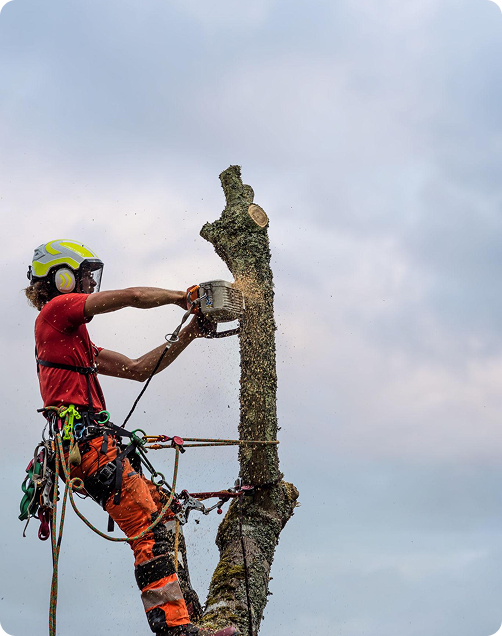
Trexlertown’s Oldest Lots and Newest Subdivisions Need Different Things From Tree Trimming
Tree trimming in Trexlertown runs across two situations that rarely get treated as the same job. The older lots that retain a connection to this community’s 1729 settlement history carry trees that grew on Upper Macungie’s limestone soils for generations. Those trees have open-grown crown architecture, structural histories that no recent planting approaches, and trimming needs proportional to their actual scale and context. The post-2000 townhouse communities and subdivisions that now make up most of Trexlertown’s housing stock carry younger trees approaching their first structural assessment window. Fifteen to twenty-five years old, beginning to show the co-dominant stems and included bark that accumulate without correction.
Spring Creek forms in Trexlertown at the confluence of Schaefer Run and Iron Run before flowing southwest to Little Lehigh Creek. Properties along the creek carry the riparian conditions that change both crown development and structural failure profile. The limestone soil geology throughout the community also matters. Well-drained limestone produces different root architecture than standard suburban soil, and that affects how the trimming assessment reads what’s happening underground.

Professional Tree Trimming in Trexlertown, PA
Trimming on the older settlement-era lots in Trexlertown starts with reading the crown in its actual context. An open-grown specimen tree on limestone soil that has been developing its structure for decades without a residential lot’s constraints has a crown architecture shaped by wind exposure, light competition, and unrestricted lateral growth. The load distribution on that tree, the specific failure points, and the right trimming approach all follow from reading that context rather than applying a standard suburban trimming template to a tree that didn’t grow in suburban conditions.
The post-2000 subdivision and townhouse trees are a more familiar situation. Norway maples, ornamental cherries, and silver maples planted in the early 2000s are now twenty to twenty-five years old. The co-dominant stems that weren’t visible at ten years are developing included bark. Deadwood is accumulating in crowns that no one has been inside. The first structural round on those trees is the same job that Breinigsville’s slightly older subdivision trees have already entered. It’s coming to Trexlertown’s post-2000 stock on the same schedule, five or ten years behind.
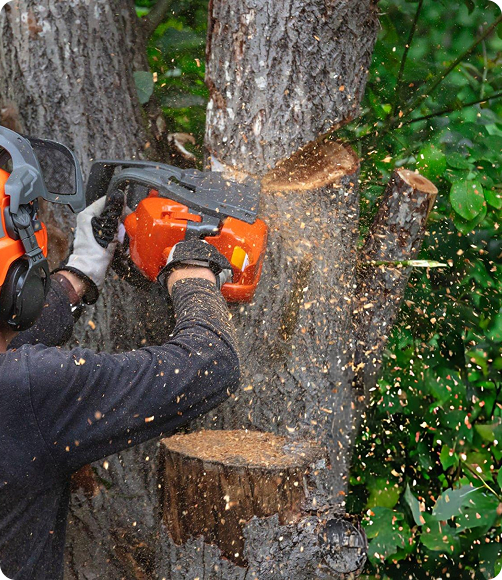
Certified Local Arborists
The species range on Trexlertown trimming jobs spans from the native oaks, hickories, and maples on the older settlement-era lots to the ornamental and shade trees standard to early 2000s residential development. Certified arborist training covers both ends of that range, and the species-specific pruning responses differ enough that working a mature open-grown red oak on limestone soil is a different job from working a Norway maple on a post-2000 townhouse lot. Getting those responses right matters on both.
Upper Macungie Township has shade tree and right-of-way provisions that apply to trimming work affecting street trees or public right-of-way canopy in Trexlertown. Route 222 along the community’s northern edge and Route 100 along the western border both carry public right-of-way trees that fall under township oversight. Confirming whether a planned trimming job involves those trees before scheduling is the step worth taking on any job where the tree sits near those corridors.
Trexlertown Tree Trimming Specialists
The older-lot homeowner in Trexlertown calling about trimming is usually asking what maintenance looks like on a tree that grew in conditions the surrounding development doesn’t produce. An open-grown oak or hickory on limestone soil that has been developing its crown without residential lot constraints for decades is not a Norway maple on a post-2000 townhouse lot. The assessment starts with reading the actual crown in its actual context, and that read produces a different set of cuts and objectives than a standard suburban trimming job. The post-2000 townhouse caller is asking an earlier version of the question Breinigsville’s subdivision homeowners are confronting: is this the trimming window, or is it already past it?
Late winter is the structural window. The older settlement-era trees benefit from dormant-season assessment that reveals the crown architecture without leaf interference. Post-2000 subdivision trees benefit from the same window for the same reason.
Complete Tree Trimming Services
for Trexlertown Properties
Thrive Tree covers tree trimming across Trexlertown’s range of conditions, from
structural work on older settlement-era specimen trees to first-cycle structural pruning
on post-2000 subdivision trees and riparian canopy management along Spring Creek.
Crown Reduction
Takes height and spread out of trees that have outgrown their sites. On Trexlertown’s post-2000 subdivision lots, Norway maples and ornamental trees are pressing into neighboring properties and approaching utility lines on lots that were sized for them at planting. Reduction cuts go to lateral branches capable of sustaining the remaining crown. On older settlement-era lots, reduction assessment accounts for the open crown architecture and the limestone soil context that shaped how the tree developed.
Structural Pruning
The priority work on both ends of Trexlertown’s housing stock. Post-2000 subdivision trees are entering their first structural cycle. Older settlement-era trees carry structural histories that have been developing over decades without systematic assessment. In both cases, the assessment before the first cut determines what’s actually present and what approach addresses it. Neither job is routine maintenance.
Dead Wood Removal
Dead scaffold branches in post-2000 subdivision Norway maples and ornamental trees, deadwood in open-grown settlement-era hardwoods, and flood-stressed deadwood in Spring Creek riparian trees are all predictable failures during significant storms. Systematic removal before storm season eliminates those failure points. It’s the trimming work with the clearest return on any Trexlertown property.
Riparian Canopy Pruning
Trees along Spring Creek have grown in creek-adjacent conditions that produce asymmetric crown development and a different structural failure profile than upland trees. The limestone soil context in Trexlertown adds another layer. Limestone drainage patterns affect how root systems develop in the Spring Creek riparian zone compared to standard suburban riparian conditions. Trimming those trees requires reading the crown in its actual context.
Frequently Asked Questions
Structural pruning on older settlement-era specimen trees on limestone soils costs more than routine maintenance on a post-2000 subdivision Norway maple, because the scale and context require a different assessment and approach. Spring Creek riparian properties add assessment scope. Right-of-way coordination adds process time near Route 222 and Route 100 when street trees are involved. An in-person estimate at the Trexlertown property is the only accurate figure.
Most established trees benefit from assessment every three to five years. Older settlement-era specimen trees on Trexlertown’s limestone soils may need less frequent but more thorough assessment given their scale. Post-2000 subdivision trees are entering their first structural cycle, and that initial round is more involved than routine maintenance. Once structural problems are addressed, a three-to-five-year interval is realistic. Spring Creek riparian trees accumulate deadwood faster than upland trees.
Late winter is the clearest structural window: dormant canopy, visible branch architecture, and efficient healing before spring growth. For both the older settlement-era trees and the post-2000 subdivision trees in Trexlertown, late winter allows the fullest view of the crown architecture before the canopy closes. Summer works for deadwood removal and clearance pruning. Spring Creek riparian trees are well-assessed with the canopy present so creek contact with the root zone can be observed. Early spring during active bud break is the window to avoid.
Trexlertown sits on the fertile limestone soils that attracted Jeremiah Trexler and the first settlers to this location in 1729. Limestone soils are well-drained and slightly alkaline, producing different root architecture than the heavier soils common elsewhere in the Lehigh Valley. Trees on limestone soils tend to develop more extensive lateral root systems at shallower depths than the same species on heavier soils. That affects how the trimming assessment reads what’s happening underground and how post-trimming root growth proceeds. It’s a variable worth knowing on any Trexlertown property where root conditions are part of the job.
Spring Creek forms in Trexlertown where Schaefer Run and Iron Run converge, then flows to Little Lehigh Creek. Trees along the creek have grown in riparian conditions that produce asymmetric crown development and a different structural failure profile than upland trees of the same species. The limestone soil context in the Spring Creek riparian zone adds another layer to the assessment. Trimming those trees requires reading the creek corridor conditions, not applying a standard upland suburban template to trees that didn’t grow in those conditions.
Pennsylvania doesn’t issue a statewide tree contractor license. All Thrive Tree crews carry general liability and workers’ compensation. Proof of insurance is available before work begins across Trexlertown. On an older settlement-era lot where a large open-grown tree’s trimming involves the full scale of decades of growth, and on post-2000 townhouse lots where a neighboring shared wall is within the work zone, that coverage matters directly
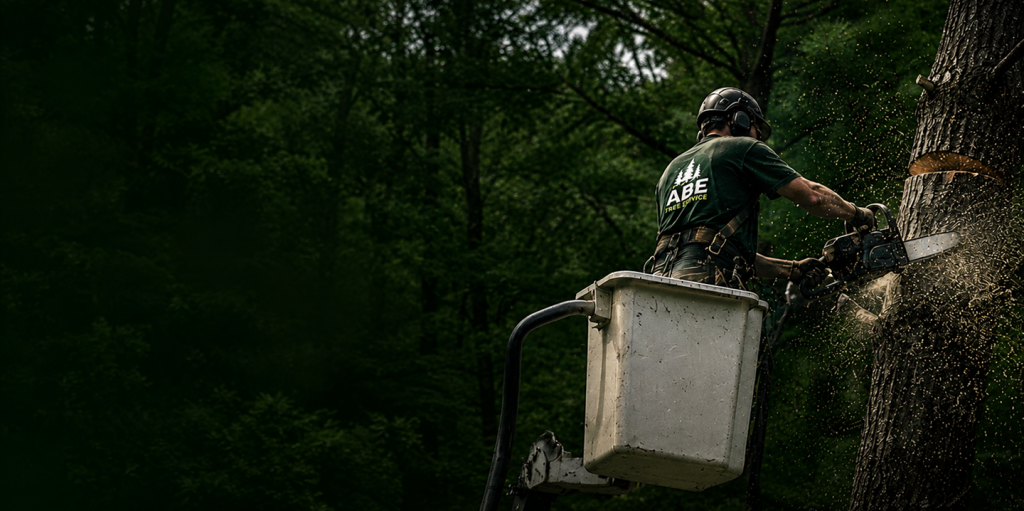
GET STARTED TODAY
YOUR TREES DESERVE
EXPERT ATTENTION
Don’t wait until a hazard becomes a headline. Call Thrive
Homes today for a free, no-obligation estimate
from your local certified arborists.
 (484) 225-8400

FULLY LICENSED
& INSURED

CERTIFIED
ARBORISTS

SAFE, RELIABLE
& PROFESSIONAL
