 Proudly Serving Allentown, Bethlehem, Easton & the Lehigh Valley
 ISA Certified Arborists
 Fully Insured

 (484) 225-8400


Tree Trimming in
Whitehall Township, PA
Tree trimming in Whitehall, PA. Thrive Tree serves Egypt
and Hokendauqua canopy, Coplay Creek riparian trees,
and Fullerton and Stiles lots.
A Hundred-Year-Old Tree Has Never Been Managed the Same Way Twice
Tree trimming in Whitehall Township’s oldest villages means working with canopy that has been managed inconsistently across generations of property owners, or not managed at all. A silver maple in Hokendauqua that was planted beside a Victorian bungalow in 1915 has had a century to accumulate co-dominant stems, included bark, and deadwood. Some of those trees have been cut heavily by previous owners. Some have never been touched. Neither history shows from the outside. Tree trimming on those properties starts with reading what has actually happened to the tree over its lifetime, not what it looks like from the sidewalk.
The mid-century neighborhoods in Stiles and Fullerton are a different situation. Norway maple planted throughout the 1950s and 1960s is now sixty-plus years old and carrying the structural problems that come with that age and that species. In Fullerton’s townhouse sections, trimming work near common-area boundaries involves the same ownership questions that complicate removal work there.

Professional Tree Trimming in Whitehall Township, PA
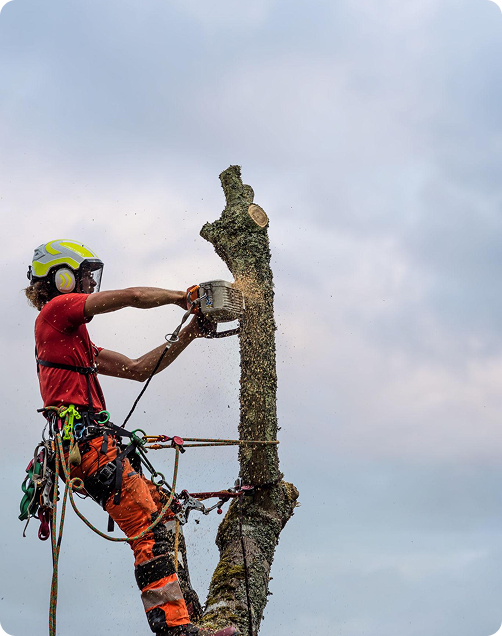
The most consequential trimming work in Whitehall right now is structural assessment on the century-old canopy in Egypt and Hokendauqua. A silver maple that looks manageable from the street may be carrying co-dominant stems with included bark that have been developing for fifty years without anyone being inside the crown to find them. The extent of the bark inclusion, the load on the weaker stem, the scaffold branches most likely to fail under ice or wind. Those are the decisions a climbing arborist makes from inside the canopy. A ground-level assessment from the sidewalk misses most of it.
Norway maple in Stiles and Fullerton punishes bad pruning. Heavy cuts trigger dense epicormic regrowth at the wound sites, weakly attached and structurally worse than what was there before. On mid-century residential lots where the crown is pressing into neighboring properties and a utility line simultaneously, the temptation is to cut heavily and quickly. The correct approach removes the interior density and the specific scaffold branches most likely to fail, without triggering the regrowth cycle that turns a manageable tree into a recurring problem.
Certified Local Arborists
Whitehall’s village neighborhoods span a wider range of tree species and structural conditions than most Lehigh Valley communities. Egypt’s older residential streets carry native oaks and hardwoods alongside Victorian-era ornamentals that have grown far beyond their original landscape role. Hokendauqua’s lots near the Ironton Rail Trail have trees whose crowns may overhang the public trail corridor. Certified arborist training covers the species-specific responses that determine where cuts go and what the tree does afterward, and in Whitehall’s village neighborhoods those species span a range that standard suburban trimming work doesn’t encounter.
The Coplay Creek riparian corridor in Hokendauqua and Cementon produces trees with asymmetric crown development shaped by light competition across the water and root systems in periodically saturated soil. Trimming those trees requires reading the crown in its creek-corridor context. What looks like a standard deadwood pass from the bank may have a different structural picture inside the canopy.
Whitehall Township Tree Trimming Specialists
Egypt and Hokendauqua homeowners calling about trees that have outlived their original planting intention and are now at the scale where a century of accumulated structural decisions need to be read before any cutting happens. The first round of work on those trees is not a maintenance pass. It’s an assessment of what a hundred years of inconsistent or absent management has produced, and what that means for what the tree can safely hold going forward. Fullerton residents booking trimming on common-area trees face the same HOA coordination step that Fullerton removal jobs require: ownership clarity before the crew arrives, not during.
Late winter books fast for structural trimming across all eight villages. Village-era lots in Egypt and Hokendauqua fill faster after storm events because the older, larger trees on those properties are more likely to produce structural failures that need immediate attention.
Complete Tree Trimming Services for
Whitehall Township Properties
Thrive Tree covers tree trimming across all eight of Whitehall Township’s village neighborhoods,
from structural intervention on the century-old canopy of Egypt and Hokendauqua to routine
maintenance on the mid-century lots of Stiles and the riparian canopy along Coplay Creek.
Crown Reduction
Takes height and spread out of trees that have outgrown their sites. On mid-century residential lots throughout Stiles and Fullerton, Norway maples planted sixty years ago are pressing into neighboring properties, overhanging township sidewalks, and making contact with PPL service drops. Reduction cuts go to lateral branches capable of sustaining the remaining crown. Topping or stub-cutting triggers the epicormic regrowth that makes Norway maple a recurring problem when worked incorrectly.
Structural Pruning
The work required on Whitehall’s oldest village lots in Egypt and Hokendauqua is more involved than routine maintenance. Trees carrying a century of co-dominant stems, included bark, and deadwood from inconsistent or absent management need a full structural assessment before the first cut. The findings from that assessment determine whether the work ends in reduction, cabling, or a removal conversation.
Dead Wood Removal
Dead scaffold branches in the silver maples and hardwoods of Egypt and Hokendauqua represent predictable failure events during any significant storm. In village neighborhoods where houses are close and the Ironton Rail Trail runs through residential lots, a failing branch has multiple possible landing zones. Systematic deadwood removal eliminates those failure points before weather makes the decision.
Riparian Canopy Pruning
Trees along the Coplay Creek corridor in Hokendauqua and Cementon have developed in creek-adjacent conditions that shape their crown architecture and structural failure profile. Trimming those trees requires reading the crown in its riparian context: asymmetric development toward the open water, deadwood accumulation patterns that differ from upland trees, and root systems in periodically saturated soil. A standard reduction approach applied without that read misses the conditions that matter.
FREQUENTLY ASKED QUESTIONS
Structural trimming on a century-old silver maple in Hokendauqua or Egypt costs more than routine maintenance on a mid-century Norway maple in Stiles. Coplay Creek riparian canopy adds assessment scope. Fullerton townhouse common-area trimming adds HOA coordination. An in-person estimate at the Whitehall Township property is the only accurate figure.
Most established trees benefit from assessment every three to five years. Village-era trees in Egypt and Hokendauqua that have been growing for a century often need a more intensive initial assessment and structural intervention before a standard maintenance interval applies. Norway maples throughout Stiles and Fullerton close in faster and often need attention on the shorter end of that range. Coplay Creek riparian trees accumulate deadwood faster than upland trees on the same streets.
Late winter is the clearest structural window: dormant canopy, visible branch architecture, and efficient healing before spring growth. For Whitehall’s village-era neighborhoods in Egypt and Hokendauqua, late winter also allows a full assessment of the utility line clearance situation before the canopy closes. Summer works for deadwood removal and clearance pruning. Early spring during active bud break is the window to avoid across all Whitehall properties.
Many can, with the right assessment first. A century-old silver maple or oak with sound trunk structure and manageable deadwood is a candidate for structural trimming that extends its viable life. A century-old tree with significant basal decay, extensive included bark in co-dominant stems, or a root system undermined by creek flooding is a removal conversation, not a trimming candidate. Getting that distinction right before making cuts is the purpose of a thorough pre-trimming assessment on Whitehall’s older village trees.
The Ironton Rail Trail runs through the Hokendauqua and Stiles sections of Whitehall Township as part of a regional trail network. Private property trees whose canopy overhangs the trail right-of-way can create debris or falling-branch hazards on the trail during trimming work. Coordinating with trail management before scheduling significant trimming work on properties adjacent to the trail removes the liability that comes from work affecting a public recreational corridor without notification.
The cement production history in Cementon left soil conditions in parts of the village that affect how trees grow and respond to pruning. Compacted, mineral-dense soils from decades of limestone processing produce trees with shallower root anchoring and different wound response characteristics than standard residential soils. Trimming cuts on trees in those soil conditions heal differently and produce different structural responses than the same cuts on trees in Hokendauqua’s standard soil profile. Worth factoring into the pre-trimming assessment on Cementon properties where the soil history is a known variable.
GET STARTED TODAY
YOUR TREES DESERVE
EXPERT ATTENTION
Don’t wait until a hazard becomes a headline. Call Thrive
Homes today for a free, no-obligation estimate
from your local certified arborists.
 (484) 225-8400

FULLY LICENSED
& INSURED

CERTIFIED
ARBORISTS

SAFE, RELIABLE
& PROFESSIONAL
