 Proudly Serving Allentown, Bethlehem, Easton & the Lehigh Valley
 ISA Certified Arborists
 Fully Insured

 (484) 225-8400


Stump Removal in
Nazareth, PA
Stump removal in Nazareth, PA. Thrive Tree grinds and
extracts stumps on limestone-substrate borough lots
and surrounding township properties.
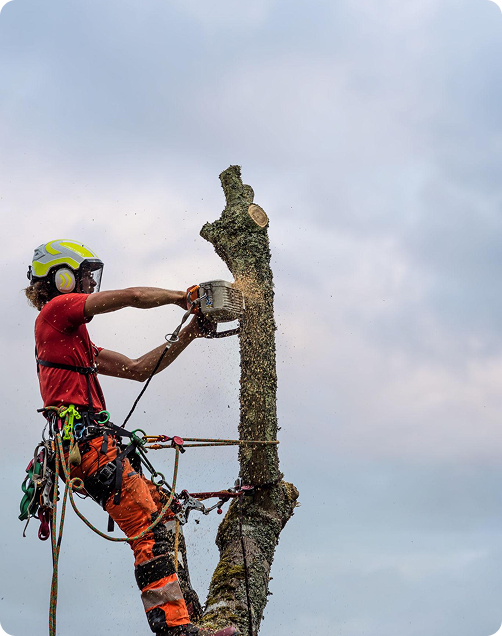
Grinding a Stump in Nazareth Means Working Through Limestone. That Changes the Job.
Stump removal in Nazareth is harder than it looks, and the limestone is why. The shallow soil over Nazareth’s limestone bedrock means tree roots don’t go down. They go sideways, wide and flat, tracking along the surface of the rock and through whatever fissures the limestone provides. A Norway maple stump on a Center Street borough lot that looks like a two-foot diameter job at grade level may have lateral roots extending eight or ten feet in multiple directions just below the surface. The grinding wheel hits those roots at angles that standard valley floor work doesn’t produce. What would be a forty-minute job in Bethlehem’s South Side clay soil is a different calculation in Nazareth’s limestone substrate.
Stump removal in Nazareth’s surrounding townships presents a different set of conditions. The converting agricultural lots of Upper and Lower Nazareth Township carry stumps from mature woodlot-edge trees that have been growing in open conditions for decades: wide crowns, proportionally wide root systems, and stump diameters that don’t fit standard residential pricing assumptions. A property off Hanoverville Road being cleared for development may have multiple stumps from field trees that make the historic district’s tight lot constraints look manageable by comparison.

Professional Stump Removal in
Nazareth, PA
Grinding is the right answer for most Nazareth residential stump removal jobs, but the depth and lateral extent of grinding on a limestone-substrate property needs to account for how the roots actually spread. A standard four-to-eight-inch grinding pass may clear the visible stump while leaving lateral roots at grade or just below it that continue to create surface problems. On Nazareth borough lots where the root system has been tracking along limestone fissures for decades, the grinding assessment includes a surface root read before the wheel starts, not just a measurement of the visible stump.
Full extraction on Nazareth properties comes up in two situations that are specific to the borough’s conditions. The first is root intrusion into the historic district’s stone foundations. A silver maple or Norway maple whose roots have been growing against an 18th-century Moravian-era foundation on Church Street or East Center Street for fifty years leaves a mass that doesn’t decompose neutrally against limestone masonry. The second is replanting in the same footprint, where limestone substrate soil conditions mean the decomposing root mass creates an unstable planting environment for longer than it would in valley floor soils. In both cases, extraction is the right call over grinding.
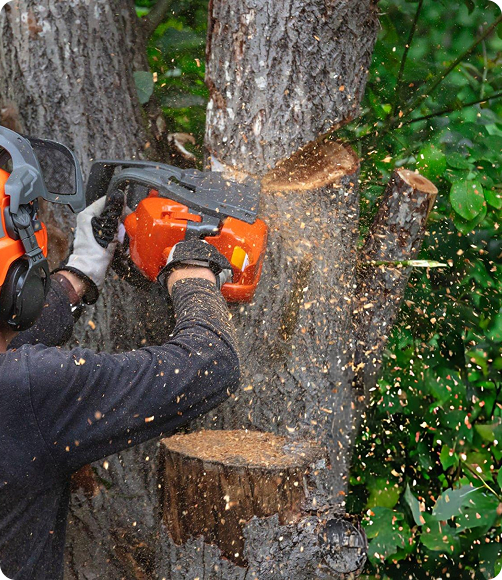
ISA-Certified Tree Care
PA One Call notification goes in before any stump grinding or excavation in Nazareth, and the two-to-three business day utility marking window is built into the schedule. Nazareth’s utility infrastructure on the borough’s residential blocks includes service drops and laterals that have been modified and extended over more than a century of occupancy. The limestone substrate affects how utilities were originally laid and how they’ve shifted over time. On borough lots, the marked locations and the actual locations of older gas and water lines don’t always agree, and the limestone fissures that root systems follow can run parallel to utility corridors in ways that complicate the assessment.
Equipment access on Nazareth’s compact borough lots requires confirmation before the job is scheduled. The grid between the historic district and Nazareth Borough Park runs tight, with shared driveways, narrow side passages, and stone walls that define lot boundaries. A grinder that reaches a standard residential stump without issue may not navigate the access constraints on a Center Street or South Main property without a specific approach plan. Confirming gate width, surface condition, and the path from the street to the stump before the job date removes the most common source of delays on Nazareth stump removal jobs.
Nazareth Stump Removal Specialists
Nazareth stump removal calls tend to come with a question the caller has already been thinking about: is grinding actually sufficient, or has the root system reached something that makes extraction the right call? On a compact historic district lot where a Norway maple has been spreading lateral roots through shallow limestone for decades, the answer depends on what the roots have reached: sidewalk slabs, a stone foundation wall, a utility corridor. The assessment before the job answers that question. Homeowners on the converting township lots in Upper and Lower Nazareth are a different conversation: field-tree stumps on open lots being cleared for development, where the access is better but the stumps are far larger than anything on the compact borough lots.
Scheduling stump work at the same time as the tree removal is always more efficient on Nazareth’s tight borough lots. Standalone stump jobs are straightforward outside the spring rush. The access confirmation step on historic district properties takes longer than on standard lots: stone walls, narrow passages, and century-old hardscape between the street and the stump are worth confirming before a date is committed.
Complete Stump Removal Services for
Nazareth Properties
Thrive Tree handles stump removal across the full range of Nazareth property types, from compact historic
borough lots on Center and Main Streets where limestone roots require careful assessment to the open
agricultural parcels of Upper and Lower Nazareth Township being converted to suburban and commercial use.
Stump Grinding
Standard grinding on Nazareth properties includes a surface root assessment before the wheel runs, because the lateral root spread in shallow limestone soil extends further than the visible stump diameter suggests. The grinding pass addresses the stump and the primary lateral roots at grade. On Nazareth borough lots where root systems have been tracking limestone fissures for decades, that assessment step determines the actual scope of the job, not the visual stump size alone.
Stump Extraction
Used when decomposition in place creates a structural or horticultural risk specific to Nazareth’s conditions. Root intrusion into historic district stone foundations on Church Street and East Center Street, replanting in the same footprint on limestone substrate where decomposing roots create an unstable planting environment longer than in standard soils, and root systems in contact with utility corridors on older borough lots are the primary extraction candidates. More labor-intensive than grinding in limestone-substrate soils, but the correct call when grinding leaves the underlying problem intact.
Surface Root Management
Norway maple and silver maple roots in Nazareth’s shallow limestone soils track sidewalk slabs and driveway edges on borough lots throughout the Center Street and South Main Street corridors. Addressing those surface roots alongside stump grinding is often the primary problem the property owner is trying to solve. Targeted lateral root grinding or cutting beyond the main stump perimeter is a standard part of Nazareth stump removal work, not an add-on.
Multi-Stump Removal
The converting agricultural parcels of Upper and Lower Nazareth Township carry field-tree stumps that don’t fit the assumptions of standard residential stump removal pricing. Open-grown field trees develop wide root systems proportional to decades of unrestricted canopy spread. Multi-stump clearings on parcels off Hanoverville Road and Route 191 being developed or improved are more cost-effective to address in a single mobilization, and the open access conditions of township lots make the work physically faster than constrained constrained borough lots of equivalent stump count.
FREQUENTLY ASKED QUESTIONS
Nazareth’s limestone substrate makes stump diameter a less reliable cost indicator than it is on valley floor properties, because lateral root spread in shallow limestone soil extends the actual scope of the job beyond what the visible stump suggests. Historic district properties on Center and Main Streets add a root-to-foundation assessment step. Township lots in Upper and Lower Nazareth with field-tree stumps involve larger root systems and different access conditions than compact borough lots. An in-person estimate at the Nazareth property is the only accurate figure.
The limestone substrate is the reason. Shallow soil over limestone bedrock produces root systems that spread wide and flat rather than deep, tracking along the rock surface and through limestone fissures in multiple directions. The grinding wheel encounters those lateral roots at angles and depths that standard valley floor work, where roots go down rather than sideways, doesn’t produce. A stump that looks like a straightforward job at grade level in Nazareth may have lateral roots extending well beyond the visible perimeter, and those roots need to be addressed as part of the grinding job, not found after the wheel stops.
A standard single-stump grinding job on an open Nazareth borough lot takes one to two hours once equipment is positioned, longer than comparable valley floor jobs because the lateral root assessment and the limestone-substrate grinding conditions add time. Township lots with larger field-tree stumps and better equipment access run faster per stump than constrained constrained borough lots. The access confirmation step on historic district properties, where stone walls and narrow passages define the path from street to stump, is worth building into the scheduling timeline rather than resolving on the day of the job.
Pennsylvania law requires PA One Call notification before any excavation, including stump grinding below a few inches. Thrive Tree places that call before every Nazareth job and builds the marking window into the schedule. On Nazareth’s older borough lots where utility infrastructure has been modified over more than a century and the limestone substrate affects how lines were originally laid, the marked locations and actual locations don’t always match. Jobs don’t start until the site is marked and the results are reviewed relative to the root spread assessment.
Replanting in the same footprint after grinding is more difficult on Nazareth’s limestone-substrate properties than on standard valley floor soils. The decomposing root mass creates uneven soil conditions that are slow to stabilize in shallow limestone substrate, and the planting environment over the decomposing roots is unreliable for longer than it would be in deeper soils. If replanting in the same location is the plan, full root extraction is the better approach on Nazareth properties. A new tree going in nearby but not in the precise footprint can typically go in after grinding, but the surrounding limestone soil profile should factor into species and placement decisions.
Stump removal on private property in Nazareth generally doesn’t require a borough permit. For stumps associated with street trees or trees visible from public rights-of-way in the National Register Historic District, coordination with the borough before grinding proceeds is advisable. The historic district covers 188 acres centered on Center and Main Streets, and the borough’s interest in maintaining the streetscape character of that area extends to significant tree work in the right-of-way zone. Confirming whether a stump falls under that oversight before scheduling removes a potential complication from what should be a straightforward job.
GET STARTED TODAY
YOUR TREES DESERVE
EXPERT ATTENTION
Don’t wait until a hazard becomes a headline. Call Thrive
Homes today for a free, no-obligation estimate
from your local certified arborists.
 (484) 225-8400

FULLY LICENSED
& INSURED

CERTIFIED
ARBORISTS

SAFE, RELIABLE
& PROFESSIONAL
