 Proudly Serving Allentown, Bethlehem, Easton & the Lehigh Valley
 ISA Certified Arborists
 Fully Insured

 (484) 225-8400


Tree Removal in
Schnecksville, PA
Tree removal in Schnecksville, PA. Thrive Tree handles
Trexler Preserve-edge lots, Jordan Creek riparian properties,
and subdivision sites.
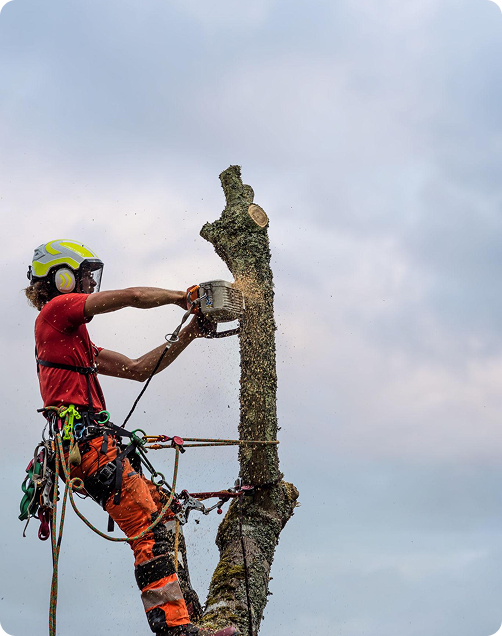
Schnecksville Sits at 660 Feet Next to 1,100 Acres of County Woodland. The Trees Reflect Both.
Schnecksville sits higher than most of the Lehigh Valley and borders the Trexler Nature Preserve directly to the southwest. The preserve is 1,108 acres of county-managed woodland: hemlock forest, meadows, rolling terrain, Jordan Creek running through it. Properties along the preserve edge carry trees that have grown in near-woodland conditions, with root systems and crown spreads that reflect the adjacent mature forest rather than a standard residential lot. Tree removal in Schnecksville starts from a different baseline from the mid-1980s subdivision lots in the community, where Norway maples and silver maples from the standard planting era are now thirty-five to forty years old and carrying the structural problems that come with that age. Both situations exist in Schnecksville. Neither is unusual for this community.
Jordan Creek runs through the Trexler Preserve and near the Geiger Covered Bridge before continuing south through the Lehigh Valley. Properties along the creek carry riparian conditions: periodically saturated soils, flood-affected root systems, canopy shaped by the creek corridor. At 660 feet, Schnecksville takes heavier ice loads than the valley communities below it, and ice damage accelerates structural failures in trees that are already carrying deficits.

Professional Tree Removal in Schnecksville, PA
Tree removal on properties bordering the Trexler Nature Preserve requires reading the tree in the context it actually grew in. Woodland-edge trees develop larger crown spreads, deeper root systems, and different structural characteristics than the same species on a standard residential lot. A red oak or sugar maple growing at the preserve boundary has had decades of competition with the adjacent forest canopy shaping how it grew. The assessment on those properties accounts for that woodland context. The root spread that crosses the property line into the preserve margin, the crown architecture shaped by competition rather than open-lot conditions.
The mid-1980s subdivision lots throughout Schnecksville are a more familiar situation. Norway maple and silver maple planted thirty-five to forty years ago are at the age where co-dominant stems with included bark, surface roots buckling driveways, and deadwood accumulating in unmaintained crowns are the standard findings. The elevation adds an ice loading variable that valley communities don’t have to the same degree. A tree with a structural deficit at 400 feet is the same tree at 660 feet until the first significant ice event. Then the difference matters.
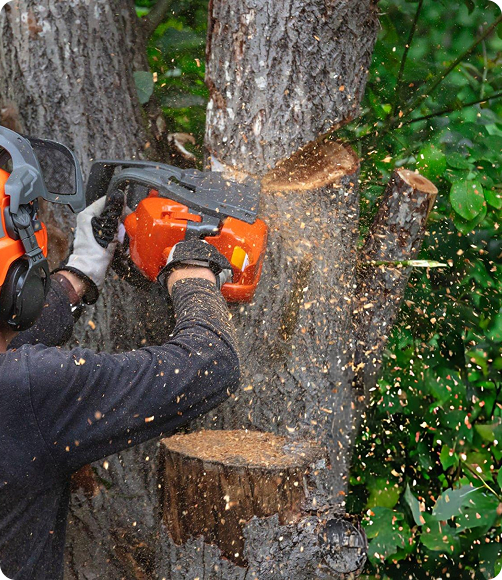
Licensed and Insured Crews
PPL infrastructure serves Schnecksville as it does the rest of North Whitehall Township, with distribution lines running overhead through the residential streets. On preserve-edge lots where large trees have crowns that may overhang both the property and the preserve boundary, the rigging plan has to account for multiple constraints before any section moves. Crews carry full general liability and workers’ compensation. A certificate is available before work begins.
Jordan Creek riparian properties in the Schnecksville area require a root zone assessment before the fall zone is established. At 660 feet, the creek’s flooding dynamics interact with a soil environment that experiences harder winters than the valley floor. A flood-stressed tree at this elevation may have a more severely compromised root plate than the same species at lower elevation, because repeated freeze-thaw cycles in saturated riparian soil accelerate root damage over time.
Schnecksville Tree Removal Specialists
The preserve-edge homeowner along the Trexler Nature Preserve boundary is dealing with a removal that has the preserve itself as a constraint on the outcome. A large hardwood whose root systems extend into the preserve margin and whose crown has been growing against the adjacent woodland canopy for decades can’t be assessed or rigged the same way as a tree on a standard residential lot. The preserve is a Lehigh County facility and a neighboring stakeholder in how the job is planned. The subdivision caller is working with a different variable: at 660 feet, the window before the next significant ice event is what makes the timing conversation more urgent than it would be for the same structural deficit in a valley community.
Preserve-edge removal jobs take longer than standard subdivision work given the scale and woodland context. Spring booking fills fast across North Whitehall Township. Getting structurally compromised trees assessed before ice season is the specific Schnecksville argument that doesn’t apply the same way in the valley.
Complete Tree Removal Services
for Schnecksville Properties
Thrive Tree handles tree removal across Schnecksville’s range of site conditions,
from the woodland-edge lots bordering the Trexler Nature Preserve to mid-1980s subdivision
canopy throughout the community and creek-adjacent properties along the Jordan Creek corridor.
Large Tree Removal
The woodland-edge properties along the Trexler Nature Preserve boundary carry trees that have grown in near-forest conditions for decades. Root systems on those lots extend into the preserve margin, and crown spreads reflect the competition with adjacent mature woodland rather than open residential lot development. Removal assessment on those properties accounts for the actual scale and root spread of the tree, not the residential lot context that surrounds it.
Hazard Tree Removal
Mid-1980s Norway maple and silver maple on Schnecksville’s subdivision lots carry the co-dominant stems and structural deficits standard to that species and age, compounded by the ice loading at 660 feet of elevation. EAB-killed ash trees still standing in parts of the community are unpredictable under wind and ice load. Assessment identifies the specific failure points before weather makes the decision.
Riparian Tree Removal
Riparian Tree Removal: Properties near Jordan Creek in the Schnecksville area carry trees in creek-adjacent riparian conditions. At Schnecksville’s elevation, freeze-thaw cycling in saturated riparian soils accelerates root damage beyond what lower-elevation creek-side properties experience. Riparian removal starts with the root zone assessment before the fall zone is established.
Ice Damage and Storm Response
At 660 feet, Schnecksville takes more significant ice loads than the valley communities to the south. Ice events that produce minor damage at lower elevations can split co-dominant stems and break scaffold branches in Schnecksville’s subdivision and preserve-edge trees. Emergency response handles trees on structures, blocking egress, or in utility contact. Post-ice assessment on trees that didn’t fail but absorbed significant ice load is worth scheduling before the next event.
Emergency Tree Removal
Significant storms that move through the Lehigh Valley hit Schnecksville earlier and harder than communities at lower elevations. The Trexler Preserve to the southwest provides some wind buffering for preserve-edge properties, but the woodland canopy at the preserve boundary also means larger trees and more consequential failures when they occur. Response is prioritized by active hazard across the community.
FREQUENTLY ASKED QUESTIONS
Schnecksville’s cost range reflects its site diversity. Large hardwood removal on preserve-edge lots bordering the Trexler Nature Preserve costs more than standard Norway maple removal on a mid-1980s subdivision lot, because the tree scale and woodland context require a different assessment and approach. Jordan Creek riparian properties add root zone assessment scope. An in-person estimate at the Schnecksville property is the only accurate figure.
The crew assesses lot access, tree condition, and any riparian or terrain factors before positioning equipment. Preserve-edge lots along the Trexler Nature Preserve require a woodland-context root spread assessment before cutting begins. Most subdivision removals run two to five hours. Preserve-edge lots with larger trees take longer. Jordan Creek riparian properties require a root zone read before cutting starts. Debris is processed throughout.
The Trexler Nature Preserve covers 1,108 acres immediately southwest of Schnecksville, with hemlock forest, meadows, and Jordan Creek running through it. Properties along the preserve boundary carry trees that have grown in near-woodland conditions for decades. Their root systems extend into the preserve margin, and their crown architecture reflects competition with the adjacent forest rather than open residential lot growth. Removal on those properties accounts for that context. The preserve is Lehigh County-managed, and work at its boundary is done with awareness of the neighboring preserve as a stakeholder in the outcome.
Schnecksville sits at approximately 660 feet, higher than most Lehigh Valley communities. Ice events that produce minor damage in valley communities can split co-dominant stems and break scaffold branches in Schnecksville trees carrying existing structural deficits. A Norway maple on a subdivision lot with included bark in its co-dominant union is carrying a risk at 660 feet that compounds with every ice season. Trees with structural problems in Schnecksville benefit from earlier intervention than equivalent trees at lower elevation, because the ice loading variable accelerates the failure timeline.
Pennsylvania doesn’t issue a statewide tree contractor license. All Thrive Tree crews carry general liability and workers’ compensation. Proof of insurance is available before work begins across Schnecksville. On a preserve-edge lot where a large hardwood’s crown overhangs the Trexler Nature Preserve boundary and a neighboring residential property simultaneously, that coverage matters directly.
Jordan Creek runs through the Trexler Nature Preserve near the Geiger Covered Bridge before continuing south. Properties adjacent to the creek in the Schnecksville area carry trees in riparian conditions: periodically saturated soils with root systems shaped by flooding cycles. At Schnecksville’s elevation, freeze-thaw cycling in those saturated riparian soils accelerates root damage over time. Creek-adjacent removal near Schnecksville starts with a root zone assessment. The fall zone and rigging plan follow from that read.
GET STARTED TODAY
YOUR TREES DESERVE
EXPERT ATTENTION
Don’t wait until a hazard becomes a headline. Call Thrive
Homes today for a free, no-obligation estimate
from your local certified arborists.
 (484) 225-8400

FULLY LICENSED
& INSURED

CERTIFIED
ARBORISTS

SAFE, RELIABLE
& PROFESSIONAL
