 Proudly Serving Allentown, Bethlehem, Easton & the Lehigh Valley
 ISA Certified Arborists
 Fully Insured

 (484) 225-8400


Tree Removal in
Whitehall Township, PA
Tree removal in South Whitehall, PA.Thrive Tree handles
Cedar Crest corridor canopy, Jordan Creek riparian
trees, and western township lots.
The Norway Maples Along Cedar Crest Corridor Are Sixty Years Old and Overdue
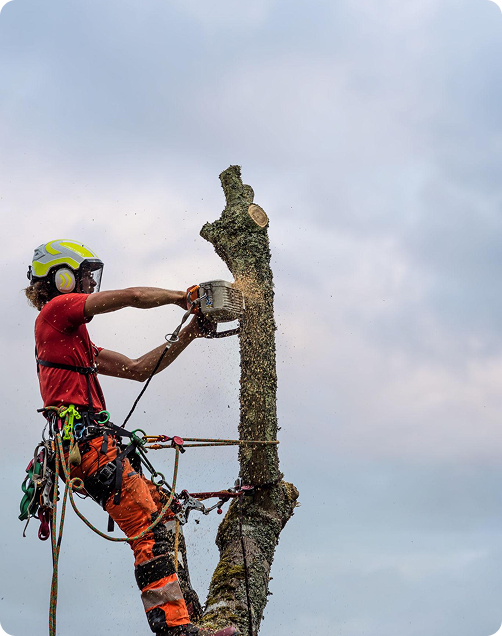
The Cape Cods and ranches that went up along the streets off Walbert Avenue and Iron Bridge Road in the 1950s and 1960s were planted with Norway maples. Fast-growing, symmetrical, shade-producing. Everything a postwar suburban street was supposed to have. Sixty-something years later, those trees are pressing against utility lines, overhanging neighboring driveways, and carrying co-dominant stems with included bark that have been developing for decades. Tree removal on those lots is constrained work. A PPL drop running through the canopy, the neighbor’s fence eight feet from the trunk, a shared driveway as the only staging area. There’s no clean fell path. Every section gets rigged and lowered.
Out near Orefield, on the subdivision lots that were farmland a generation ago, tree removal is a different job. Larger lots, better access, younger trees from planned landscaping. A Bradford pear or silver maple that outgrew its landscape assignment is still a removal job, but the physics of it are entirely different from a constrained Cedar Crest corridor lot.

Professional Tree Removal
in South Whitehall Township, PA
Cedar Crest corridor removal starts with the assessment, not the saw. The lean, the root zone condition, the co-dominant stem unions, the location of the PPL service drop relative to the crown. Those questions get answered before any rigging plan is established. On a mid-century lot off Walbert Avenue where the staging area is a shared driveway and every section has to be lowered to a controlled landing point, there’s no margin for skipping that read. The constraint is the defining condition on most Cedar Crest corridor removal jobs, not the tree size.
The Jordan Creek corridor near Covered Bridge Park is its own situation. Properties along the creek between the historic covered bridges on Wehr Mill Road and Lapp Road carry trees whose root systems have been in periodically flooded soil for years. A flood-stressed tree doesn’t always show it from the outside. The root plate may still look sound from the surface, the canopy may look full, but repeated inundation changes how a root system anchors over time. Creek-adjacent removal on the South Whitehall side of the Jordan Creek starts with the root zone, not the crown.
Licensed and Insured Crews
South Whitehall Township has Shade Tree Ordinances that govern trees in the right-of-way. Work affecting those trees requires township coordination before it proceeds. On the Cedar Crest corridor where street trees are common and the boundary between private property and the right-of-way isn’t always obvious from the curb, confirming which side of that line a tree sits on is the first step. Skipping that step and removing a street tree without coordination creates liability for whoever ordered the work.
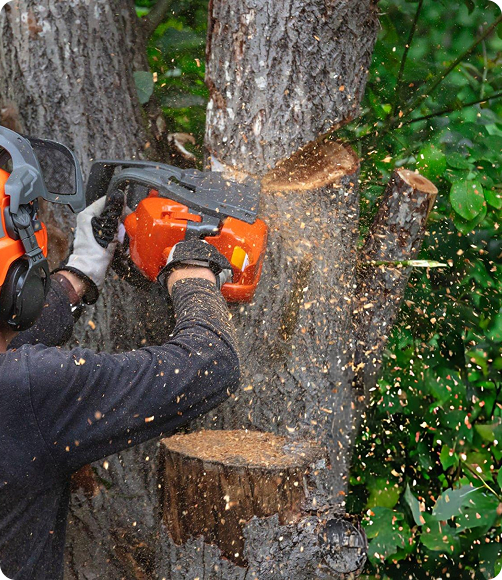
PPL distribution lines run overhead on virtually every residential block in the Cedar Crest corridor. When a tree has been growing into the wire zone for decades, the rigging plan has to account for the line before any section moves. Crews carry full general liability and workers’ compensation. On a South Whitehall mid-century lot where a rigging failure has a PPL drop, a parked car, and a neighbor’s fence all within reach, that coverage is not incidental.
South Whitehall Tree Removal Specialists
The most common Cedar Crest corridor removal call comes from a homeowner who has known the Norway maple was a problem for two or three years and kept putting it off because the lot looked too constrained to work. The PPL drop through the canopy, the neighbor’s fence at the edge of the staging area, the shared driveway as the only access point. Those are real constraints. They’re also the standard conditions on most Cedar Crest corridor lots, and sectional rigging to a controlled landing point is how they get handled routinely. The western township homeowner near Orefield is a shorter call: a Bradford pear or silver maple that outgrew its landscape assignment on a lot where access is straightforward and the removal itself is unremarkable.
An estimate requires a site visit. The Cedar Crest corridor’s access constraints, the creek corridor’s soil situation, the open conditions of the western township. None of that comes through in a photo. Jobs run on the date scheduled unless weather makes climbing unsafe
Complete Tree Removal Services for
South Whitehall Township Properties
Thrive Tree handles the full range of removal work across South Whitehall Township, from constrained
Cedar Crest corridor lots where Norway maple canopy has been growing unchecked since the
postwar era to open western township properties and creek-adjacent riparian sites along the Jordan Creek.
Large Tree Removal
The standard removal condition on South Whitehall’s mid-century residential lots between Cedar Crest Boulevard and the township’s eastern edge. Tight lots, aging Norway maple and silver maple canopy, PPL proximity on every block, and sectional dismantling as the default. The lots off Walbert Avenue and Iron Bridge Road are representative: no clean fell path, shared driveways for staging, and utility drops running through canopies that haven’t been managed in decades.
Hazard Tree Removal
Co-dominant stems with included bark throughout the Cedar Crest corridor’s mid-century tree stock, surface roots working under township sidewalk slabs, and scaffold branches with decay at the union that isn’t visible from grade. Assessment covers trunk integrity, root zone condition, and proximity to structures. On lots where structural pruning is the better call over removal, a written assessment makes that case.
Riparian Tree Removal
Properties near Covered Bridge Park along the creek between the historic covered bridges on Wehr Mill Road and Lapp Road, and near the Jordan Creek Greenway trail, carry trees with flood-affected root systems. Riparian removal starts with the root zone assessment because a compromised root plate on a flood-stressed tree changes the fall zone and rigging calculation entirely.
Hillside Tree Removal
West of Cedar Crest Boulevard, South Whitehall’s rolling topography puts some residential lots on grades that change the fall direction assessment and rigging geometry. The neighborhoods near Kohler Ridge Park are the most common sites where slope becomes the primary removal variable rather than access or utility proximity.
Emergency Storm Response
The Jordan Creek corridor and the rolling terrain sections of the western township both sustain storm damage when a significant nor’easter or summer derecho moves through. Emergency response handles trees on structures, blocking egress, or in utility contact across the township. Creek-adjacent properties near Covered Bridge Park are prioritized after flooding events, when root plate failures follow the inundation.
Frequently Asked Questions
The range is wide because the site conditions are wide. A Norway maple on a constrained Cedar Crest corridor lot with a PPL drop running through the canopy costs more to remove than the same species on a newer Orefield subdivision lot with room to work. Creek-adjacent properties near Covered Bridge Park add a root zone assessment step. Sloped lots west of Cedar Crest Boulevard add rigging complexity. An in-person estimate at the property is the only number worth planning around.
The crew assesses access and any grade or riparian conditions before positioning equipment. On Cedar Crest corridor lots, vehicles near the tree should be moved beforehand. Most residential removals run two to five hours. Tight mid-century lots take longer than open western township properties of the same tree size because rigging to a controlled staging area is slower than a ground fell. Creek-adjacent properties near Covered Bridge Park get a root zone read before cutting begins. Debris is processed throughout the job..
Yes, when the tree is in the right-of-way or has branches overhanging a public street or sidewalk. The ordinance governs those trees regardless of who planted them. On the Cedar Crest corridor where street trees are common and the property-to-right-of-way boundary isn’t always clear from the curb, confirming the tree’s status before scheduling is the first step. The township publishes its Shade Tree Ordinances and Policy through the Community Development department.
Periodic flooding along the Jordan Creek corridor changes how root systems develop and anchor over time. A tree on a creek-adjacent lot near Covered Bridge Park that has experienced repeated inundation may have a compromised root plate that isn’t apparent from the canopy or the visible root flare above grade. That root condition changes the fall zone assessment, the rigging geometry, and how the crew reads stability during the removal. Creek-adjacent removal in South Whitehall starts with the root zone rather than the crown for this reason.
Pennsylvania doesn’t issue a statewide tree contractor license. All Thrive Tree crews carry general liability and workers’ compensation. Proof of insurance is available before work begins. On a mid-century Cedar Crest corridor lot where a rigging failure has a neighbor’s fence, a parked car, and a PPL drop all within reach, that coverage matters directly to the property owner.
Meaningfully. Cedar Crest corridor lots are small, the canopy is old, utilities run overhead on every block, and sectional rigging is the default. Orefield-area subdivision lots are larger, the trees are younger, access is easier, and a ground fell is sometimes viable. The same tree species costs less to remove on an Orefield lot than on a Cedar Crest corridor lot, because the site conditions determine the approach more than the tree itself does.
GET STARTED TODAY
YOUR TREES DESERVE
EXPERT ATTENTION
Don’t wait until a hazard becomes a headline. Call Thrive
Homes today for a free, no-obligation estimate
from your local certified arborists.
 (484) 225-8400

FULLY LICENSED
& INSURED

CERTIFIED
ARBORISTS

SAFE, RELIABLE
& PROFESSIONAL
