 Proudly Serving Allentown, Bethlehem, Easton & the Lehigh Valley
 ISA Certified Arborists
 Fully Insured

 (484) 225-8400


Stump Removal in
South Whitehall
Township, PA
Tree trimming in South Whitehall, PA. Thrive Tree handles
Cedar Crest corridor canopy, Jordan Creek riparian
trees, and western township lots.
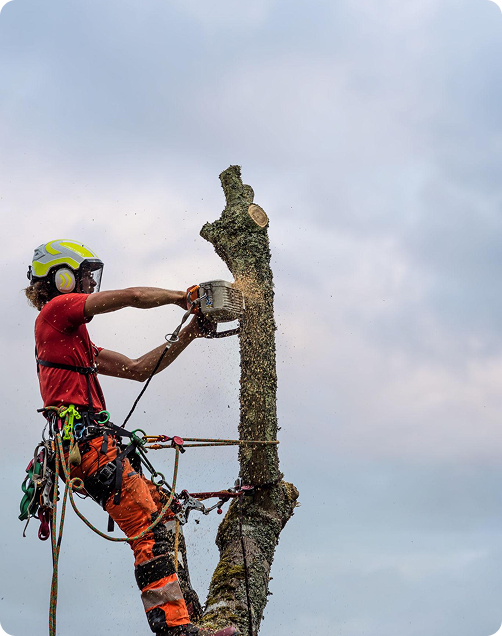
Sixty Years of Growth Without a Climber in the Crown Shows.
The Norway maples and silver maples on South Whitehall’s mid-century residential lots along the Cedar Crest corridor have been growing since the housing went up. Most of them have never had tree trimming work that went beyond clearing a branch from a roofline. Some have had branches cleared when they pressed against a roofline or hit a utility line, but systematic trimming, reading the crown, identifying the co-dominant stems with included bark, removing the deadwood before a storm removes it first, hasn’t happened on most of these properties. It accumulates. A silver maple off Walbert Avenue with thirty years of deferred structural work is not a maintenance trimming job. It’s a structural intervention that maintenance trimming follows.
The newer subdivision lots west of Cedar Crest Boulevard near Orefield are the opposite problem. Younger trees from planned landscaping, some of them now reaching the scale where formative decisions become consequential. A competing leader left uncorrected at fifteen feet is a structural problem at thirty. Getting into those trees while the work is still minor is the entire argument for formative pruning.

Professional Tree Trimming in South Whitehall Township, PA
Tree trimming on Cedar Crest corridor lots starts with reading the crown from inside it, not from the sidewalk. Co-dominant stems with included bark on a mid-century silver maple don’t announce themselves from the street. The extent of the bark inclusion, the load distribution between the competing stems, and the scaffold branches most likely to fail under ice or wind load. Those are the decisions a climbing arborist makes from inside the canopy. A Norway maple that has been growing untouched for decades may look like a clearance job from below and be a structural assessment from above.
Jordan Creek riparian trees near Covered Bridge Park and along the Greenway trail develop differently than the same species on upland lots. Faster vertical growth toward light across the water, asymmetric crown development, and deadwood accumulation patterns that reflect the creek-corridor environment rather than a standard residential lot. Trimming those trees without accounting for that context misses the structural picture. The failure points in a riparian crown are not where they are in an upland crown of the same species.
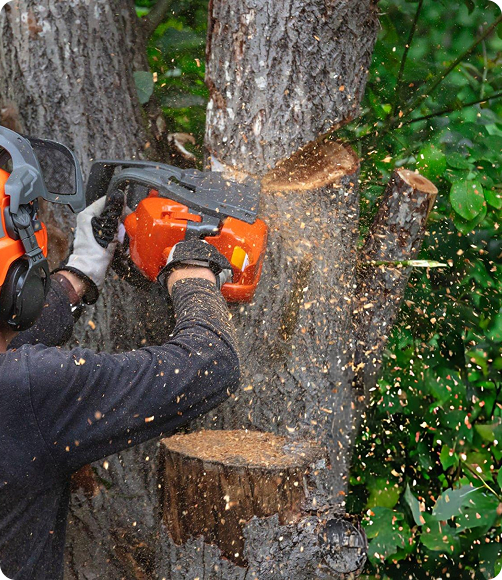
Certified Local Arborists
Norway maple is the dominant species on South Whitehall’s older Cedar Crest corridor blocks, and it’s a species that punishes bad pruning decisions. Heavy cuts trigger dense epicormic regrowth at the wound sites. Weakly attached, structurally worse than what was there before. On a Cedar Crest corridor lot where the crown is pressing into neighboring properties and a utility line simultaneously, the temptation is to cut heavily and quickly. The correct approach removes the interior density and the specific scaffold branches most likely to fail, without triggering the regrowth cycle that turns a manageable tree into a recurring problem.
South Whitehall’s rolling topography west of Cedar Crest Boulevard produces crown load distribution on sloped lots that differs from the flat suburban grid closer to the boulevard. A climbing arborist inside the crown of a maple on a sloped lot near Kohler Ridge Park reads the load patterns differently than a ground-level assessment from the street suggests. What looks like a minor scaffold branch from below may be carrying disproportionate lateral load on a slope. The trimming decisions on those trees reflect the grade, not just the canopy..
South Whitehall Tree Trimming Specialists
Cedar Crest corridor homeowners who have been managing the visible problem for years: clearing the branch that pressed against the roofline, cutting back what touched the fence, calling when something failed. What hasn’t happened on most of these properties is the work inside the crown, finding the co-dominant stems and the structural deadwood that isn’t visible from below. A silver maple off Walbert Avenue with thirty years of clearance passes and no structural assessment is not well-maintained. It’s deferred in a way that’s easy to miss from the outside. The western township homeowner near Orefield is at the other end: a younger planned landscape tree with a competing leader that hasn’t become a problem yet, and a formative pruning window that closes on its own schedule regardless of whether the work gets done.
Spring and post-storm scheduling windows fill fast across the township. Jobs involving South Whitehall Township Shade Tree Ordinance coordination for right-of-way trees need that step built into the timeline before booking, not after.
Complete Tree Trimming Services for
South Whitehall Township Properties
Thrive Tree covers the full range of tree trimming work across South Whitehall Township,
from structural intervention on the aging Cedar Crest corridor canopy to formative pruning on the
newer western township plantings and riparian canopy management along the Jordan Creek.
Crown Reduction
Takes height and spread out of trees that have outgrown their sites. On Cedar Crest corridor mid-century lots, Norway maples and silver maples planted sixty years ago are pressing into neighboring properties, overhanging township sidewalks, and making contact with PPL service drops. Reduction cuts go to lateral branches capable of sustaining the remaining crown. Topping or stub-cutting triggers the epicormic regrowth that makes Norway maple a recurring maintenance problem when it’s worked incorrectly.
Dead Wood Removal
The highest-priority trimming work on South Whitehall’s established Cedar Crest corridor canopy. Dead scaffold branches in aging silver maples off Walbert Avenue, co-dominant stems with included bark throughout the mid-century neighborhoods, and flood-stressed deadwood in riparian trees near Covered Bridge Park are predictable failure events during significant storms. Systematic removal of those failure points before storm season is the work that prevents damage rather than responds to it.
Riparian Canopy Pruning
Trees adjacent to the Jordan Creek between the historic covered bridges on Wehr Mill Road and Lapp Road, and along the Greenway trail corridor, have developed in riparian conditions that change their crown architecture and structural failure profile. Trimming those trees requires reading the crown in its creek-corridor context before applying any reduction or deadwood approach. Assessment on riparian South Whitehall trees includes a root zone read as a standard step.
Formative Pruning
The planned landscape trees in South Whitehall’s newer western township developments near Orefield and around Kohler Ridge Park are reaching the scale where formative structural decisions become consequential. A young red maple or honeylocust with a competing leader is a pruning job now and a structural problem in fifteen years. Getting into those trees early sets the branch architecture before the weight makes correction difficult.
Right-of-Way Clearance Pruning
Trimming that involves South Whitehall Township street trees or private tree branches overhanging the public right-of-way falls under the township’s Shade Tree Ordinances. On the Cedar Crest corridor where mature canopy overhangs both private property and the right-of-way simultaneously, that determination is built into the job scope from the start. Work proceeds after the right-of-way status is confirmed.
Frequently Asked Questions
Norway maple reduction on a constrained Cedar Crest corridor lot with PPL proximity costs more than the same scope on an open western township property with better access. Jordan Creek riparian trees add assessment scope. Sloped lots west of Cedar Crest Boulevard add terrain complexity. Shade Tree Ordinance coordination adds process time on right-of-way trees. An in-person estimate at the South Whitehall property is the only accurate figure.
Most established trees benefit from assessment every three to five years. The Norway maples and silver maples in the Cedar Crest corridor have been accumulating structural deficits for longer than that on many properties, and the initial round of work is more involved than routine maintenance. Riparian trees near the Jordan Creek corridor accumulate deadwood faster than upland trees. Newer western township plantings benefit from formative attention during their first decade.
Late winter is the clearest structural window: dormant canopy, visible branch architecture, and efficient healing before spring growth. For Cedar Crest corridor properties, late winter also allows a clear view of utility line clearance situations before the canopy closes. Summer works for deadwood removal and clearance pruning. Jordan Creek riparian trees are best assessed with the canopy present so the creek’s contact with the root zone can be observed. Early spring during active bud break is the window to avoid.
The ordinance governs trees and branches in the public right-of-way, including branches overhanging public streets and sidewalks from private property trees. Trimming that stays entirely on private property generally doesn’t require township coordination. Work involving street trees or branches overhanging the right-of-way benefits from coordination before proceeding. South Whitehall publishes its Shade Tree Ordinances and Policy through the Community Development department. The ordinance is active.
Yes, with the right approach. Norway maple’s epicormic regrowth at heavy cut points is a response to improper pruning, not an inherent trait that can’t be managed. Correct work on Cedar Crest corridor Norway maples removes the dense interior canopy and the scaffold branches most likely to fail under ice and wind load, without triggering the stub-cutting regrowth cycle. A crew that understands the species’ response can work these trees effectively. One that doesn’t will create a maintenance problem that repeats every few years.
The trimming objectives are different. Cedar Crest corridor trees are older, larger, and carrying structural deficits from decades of deferred work. The goal is structural intervention: finding and addressing the co-dominant stems, the deadwood, the clearance problems that have been accumulating since the postwar era. Western township subdivision trees near Orefield are younger, on larger lots, and the goal is formative: setting architecture before the weight makes correction difficult. Both are trimming jobs. Neither is routine maintenance on the other’s terms.
GET STARTED TODAY
YOUR TREES DESERVE
EXPERT ATTENTION
Don’t wait until a hazard becomes a headline. Call Thrive
Homes today for a free, no-obligation estimate
from your local certified arborists.
 (484) 225-8400

FULLY LICENSED
& INSURED

CERTIFIED
ARBORISTS

SAFE, RELIABLE
& PROFESSIONAL
